


What's Happening?
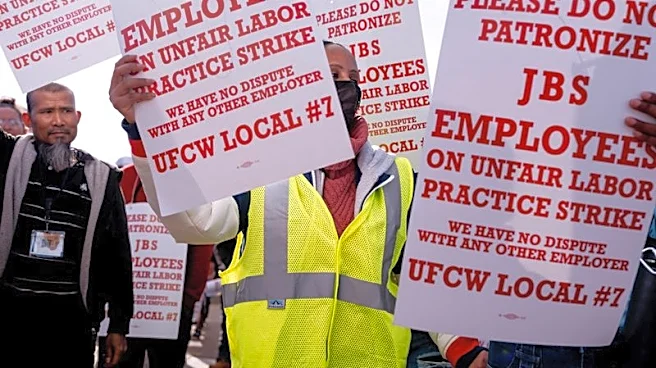
Workers at the Swift Beef Co. plant in Greeley, Colorado, have decided to end their three-week strike and return to work after JBS USA, the plant's owner, agreed to resume negotiations. The strike, which began on March 16, was organized by the United
Food and Commercial Workers Local 7 union, demanding higher wages and better healthcare benefits. This labor action coincides with a significant decline in U.S. cattle numbers, the lowest in 75 years, partly due to drought and low prices for ranchers. Despite soaring beef prices, the union claims that JBS USA's wage offer was insufficient, offering less than a 2% annual increase, which is below the inflation rate in Colorado. JBS USA, the world's largest meatpacking company, has denied any unfair labor practices and maintains that its contract offer is fair. The Greeley plant, which accounts for about 6% of the U.S. beef slaughterhouse capacity, is a major employer in the area.
Why It's Important?
The resolution of the strike at the Greeley plant is significant for the U.S. meatpacking industry, which has been under pressure due to declining cattle numbers and rising beef prices. An extended strike could have disrupted the industry further, potentially leading to increased beef prices. The decision to resume negotiations reflects the critical role of labor unions in advocating for workers' rights and the importance of maintaining operational stability in key industries. The outcome of these negotiations could set a precedent for labor relations in the meatpacking sector, influencing future wage and benefit discussions. Additionally, the strike highlights broader economic challenges, such as inflation and supply chain disruptions, affecting both workers and consumers.
What's Next?
As negotiations between JBS USA and the union resume, the focus will be on reaching a mutually agreeable contract that addresses the workers' demands for better wages and healthcare benefits. The outcome of these talks could influence labor relations in other meatpacking plants across the country. Stakeholders, including industry analysts and consumer groups, will be closely monitoring the situation, as any disruptions in meatpacking operations could impact beef prices and availability. The resolution of this strike may also prompt other unions to reassess their strategies in advocating for workers' rights in similar industries.