








What's Happening?
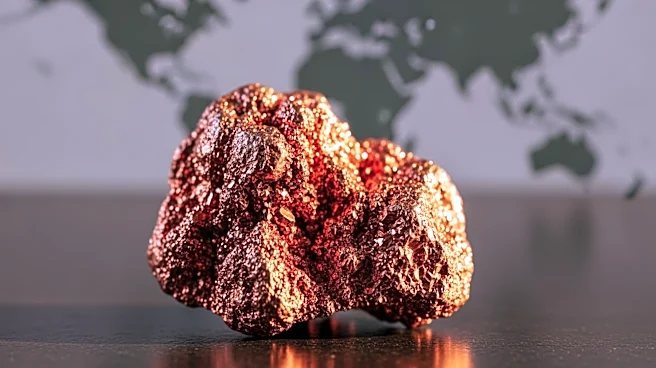
The Democratic Republic of the Congo's (DRC) state mining company, Gécamines, has significantly increased its copper export commitment to the United States, pledging 500,000 tonnes through Swiss trader Mercuria. This expansion is part of a broader strategy
to monetize stakes in major mining assets, including those in Glencore's Kamoto Copper Company and the Tenke Fungurume mine, which is operated by Chinese interests. The move reflects a growing trend across Africa's Copperbelt, where state-backed trading models are being developed to exert greater control over commodity exports. This initiative is seen as a response to the increasing global demand for critical minerals, driven by Western economies' efforts to secure supply chains for energy transition and advanced manufacturing.
Why It's Important?
This development is significant as it underscores the strategic importance of the DRC in the global mineral supply chain, particularly for copper and cobalt, which are essential for renewable energy technologies and electric vehicles. By expanding its export commitments, the DRC is positioning itself as a key player in the global market, potentially influencing prices and supply dynamics. The involvement of state-backed entities in trading could lead to more stable and predictable supply chains, benefiting industries reliant on these minerals. However, it also raises questions about the balance of power in global trade and the potential for increased geopolitical tensions as countries vie for control over critical resources.
What's Next?
As Gécamines continues to build its capacity for independent trading, the DRC may see increased investment in infrastructure and risk management capabilities. This could lead to a more robust and self-sufficient mining sector. However, the transition to a fully independent trading operation is expected to take time, given the complexities of global metals trading. Stakeholders, including Western economies and multinational corporations, will likely monitor these developments closely, as they could impact global supply chains and market dynamics. Additionally, the success of this model in the DRC could influence other African nations to adopt similar strategies, further reshaping the landscape of global mineral trade.