



What's Happening?
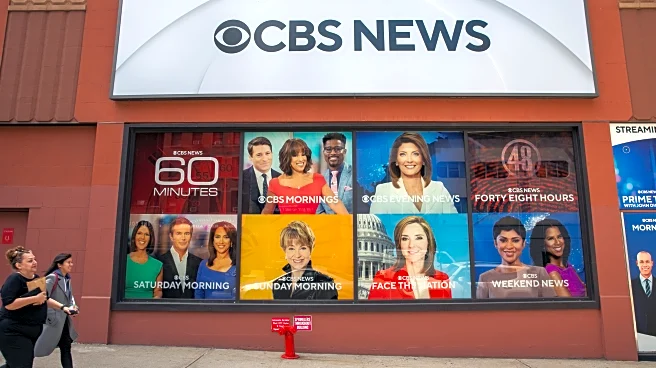
The Writers Guild of America (WGA) has condemned recent layoffs at CBS News, which affected approximately 6% of its workforce, equating to 60 to 70 positions. A significant portion of these layoffs includes the complete shutdown of CBS News Radio, a service
with nearly a century-long history. The WGA described the layoffs as a result of 'recklessness and greed' by CBS leadership, specifically naming Bari Weiss, the editor in chief, and David Ellison, the CEO of Paramount, CBS's parent company. The union expressed concern over the impact on its members and criticized the decision to close CBS News Radio, highlighting its historical significance and the role it played in American journalism.
Why It's Important?
The layoffs at CBS News, particularly the closure of its radio division, underscore the ongoing challenges faced by traditional media outlets in adapting to the digital age. The decision has sparked criticism from the WGA, which represents writers and journalists, emphasizing the potential loss of jobs and the diminishing platforms for journalistic expression. This development raises concerns about the future of news media, especially as major corporations like Paramount pursue mergers and acquisitions, such as the recent $111 billion deal to acquire Warner Bros. Discovery. The consolidation of media outlets could lead to further job cuts and reduced diversity in news coverage, impacting the public's access to varied and independent news sources.
What's Next?
The WGA has already staged a 24-hour walkout at CBS News 24/7 as part of their efforts to negotiate a new contract following its expiration. The union's actions suggest continued advocacy for its members and potential further protests or negotiations. Additionally, the pending acquisition of Warner Bros. Discovery by Paramount could lead to more restructuring and layoffs, prompting further scrutiny from unions and media watchdogs. The outcome of these negotiations and the impact of the merger will be closely watched by industry stakeholders and could influence future labor relations and media consolidation trends.