



What's Happening?
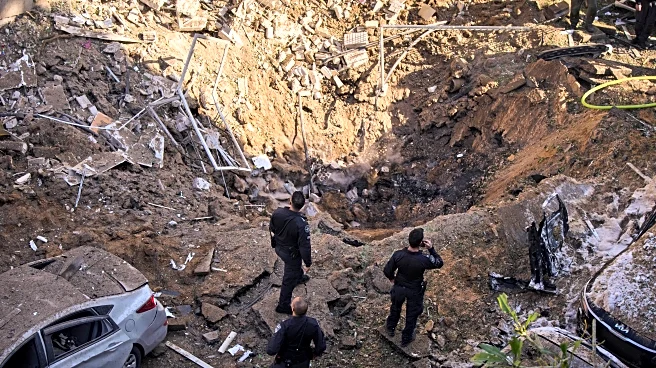
Retail companies are expressing concerns over the potential for increased costs and subsequent price hikes if the ongoing conflict in the Middle East continues. The instability in the region, particularly the effective closure of the Strait of Hormuz,
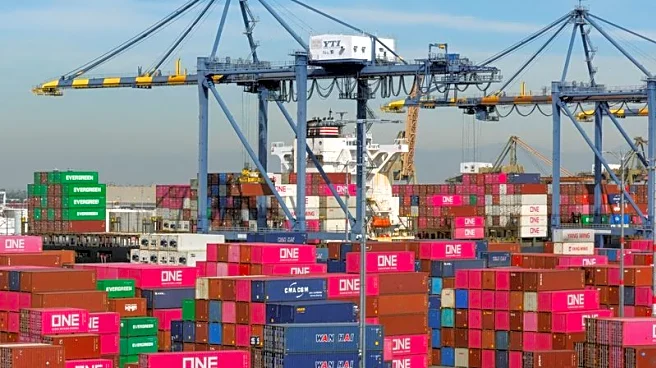
has already led to soaring oil and gas prices since the conflict began on February 28. British retailer Next has reported an anticipated £15 million ($20 million) in additional costs due to the conflict, primarily from fuel and air freight expenses. These costs are expected to be absorbed in the short term, but if the conflict extends beyond three months, the company plans to pass these costs onto consumers through higher prices. The Middle East accounts for about 6% of Next's total turnover, and the ongoing conflict could further strain supply chains and increase inflationary pressures, affecting consumer demand and spending.
Why It's Important?
The potential for increased retail prices due to the Middle East conflict could have significant implications for both businesses and consumers. Retailers may face a double burden of rising costs and disrupted supply chains, which could lead to higher prices for consumers. This situation could exacerbate inflationary pressures, particularly in regions heavily reliant on Middle Eastern oil and gas. For consumers, especially those already facing a high cost of living, increased prices could reduce discretionary spending, impacting overall economic activity. The European Central Bank is closely monitoring inflation indicators, including companies' price-hike expectations and wages for new hires, as these factors could influence broader economic policies and decisions.
What's Next?
If the conflict in the Middle East persists, retailers may need to implement price increases to offset rising costs. This could lead to a shift in consumer behavior, with potential reductions in spending on non-essential items. Businesses may also need to explore alternative supply chain strategies to mitigate the impact of the conflict. Additionally, policymakers and economic stakeholders will likely continue to monitor the situation closely, as prolonged instability could necessitate adjustments in economic forecasts and policy measures to address inflation and maintain economic stability.