

What's Happening?
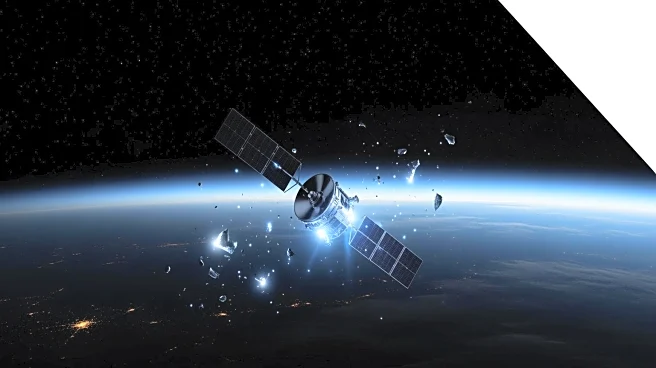
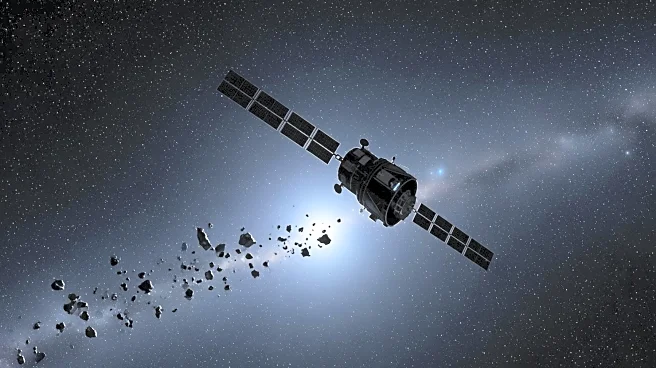
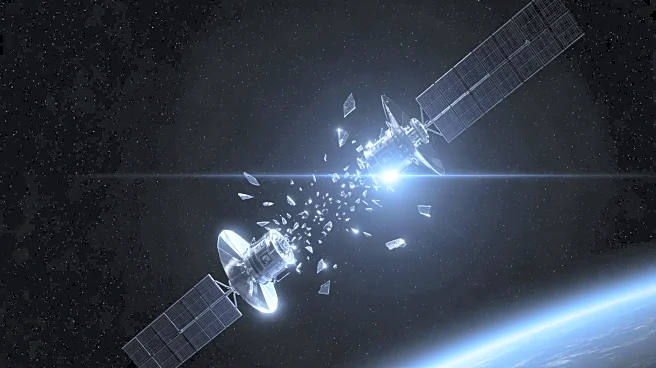
SpaceX's Starlink division has confirmed an anomaly involving one of its satellites, identified as Starlink 34343, which resulted in the satellite breaking apart into tens of pieces. The incident occurred at approximately 560 km above Earth, and the company
has lost communication with the satellite. LeoLabs, a radar network operator, detected the fragmentation event and noted that it was likely caused by an internal energetic source rather than a collision with space debris or another object. The fragments are expected to de-orbit within a few weeks due to the low altitude of the event. SpaceX has stated that the anomaly poses no new risk to the International Space Station, its crew, or NASA's Artemis II mission. The company is actively working to determine the root cause and implement corrective actions.
Why It's Important?
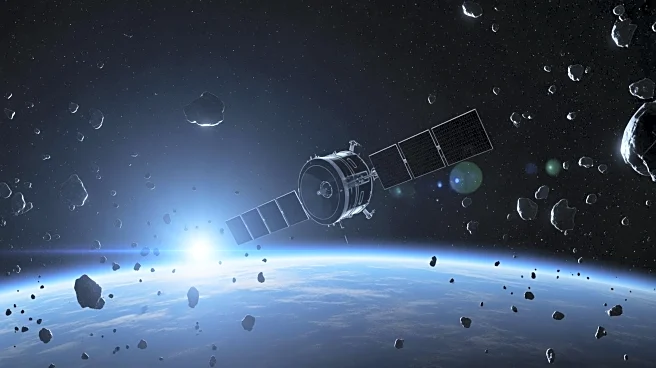
The fragmentation of a Starlink satellite highlights the challenges and risks associated with the increasing number of satellites in low Earth orbit. Such incidents can contribute to space debris, which poses a threat to other satellites and space missions. The ability to quickly identify and mitigate anomalies is crucial for maintaining the safety and sustainability of space operations. This event underscores the importance of coordination among space-faring entities to prevent collisions and manage space traffic effectively. The incident also emphasizes the need for robust systems to handle unexpected satellite failures, which can have broader implications for global communications and space exploration efforts.
What's Next?
SpaceX is currently investigating the cause of the anomaly and is expected to implement necessary corrective measures to prevent similar incidents in the future. The company will continue to monitor the satellite and any trackable debris, coordinating with NASA and the US Space Force. The outcome of this investigation could lead to improvements in satellite design and operational protocols. Additionally, the incident may prompt discussions on international cooperation and regulations to enhance space traffic management and debris mitigation strategies.