
What's Happening?
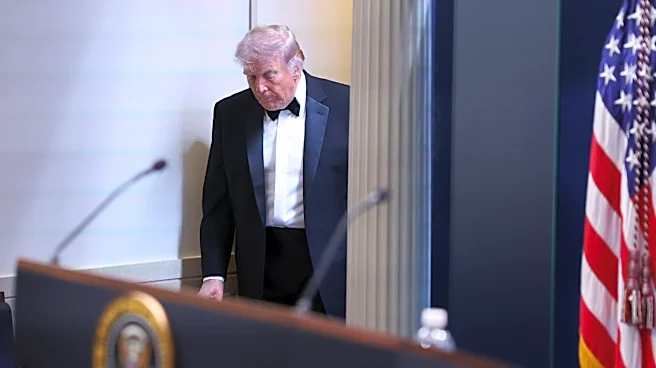
First Lady Melania Trump has publicly criticized late-night host Jimmy Kimmel for what she describes as 'hateful and violent rhetoric' following a joke he made about her. The controversy arose after a clip from Kimmel's show, where he parodied the White
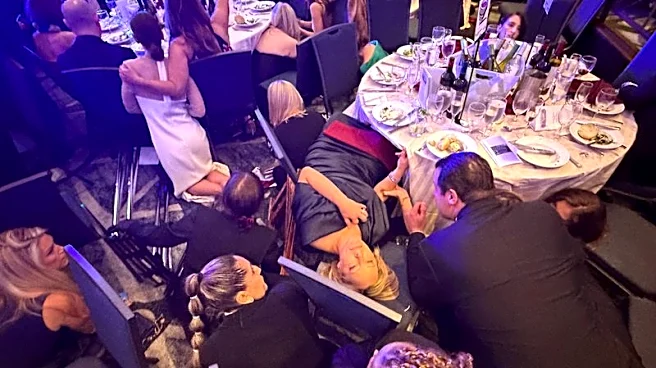
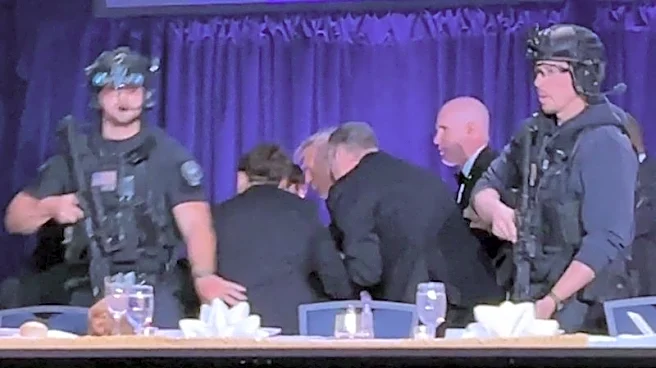
House Correspondents' Dinner and made a joke about the First Lady, resurfaced online. This incident coincided with a shooting at the dinner event, which authorities suggest may have targeted members of the Trump administration. In response, Trump supporters have expressed outrage towards Kimmel, and Melania Trump has accused him of contributing to a 'political sickness' in the country. She has also called on ABC, the network airing Kimmel's show, to take a stand against the host's comments.
Why It's Important?
The incident highlights ongoing tensions between media figures and political figures, particularly those associated with President Trump. Melania Trump's call for ABC to take action against Kimmel underscores the broader debate about the role of media in political discourse and the boundaries of comedic expression. This situation could influence public perception of media bias and the responsibilities of networks in moderating content that may be perceived as inflammatory. The First Lady's involvement also brings attention to the personal impact of media commentary on public figures and their families, potentially affecting how networks handle similar situations in the future.
What's Next?
As this is a developing story, further reactions from ABC and Jimmy Kimmel are anticipated. The network may face pressure to address the First Lady's concerns, which could lead to discussions about content guidelines and the responsibilities of media personalities. Additionally, this incident may prompt broader conversations about the impact of media rhetoric on political polarization and public safety, especially in light of the recent shooting at the White House Correspondents' Dinner.