



What's Happening?
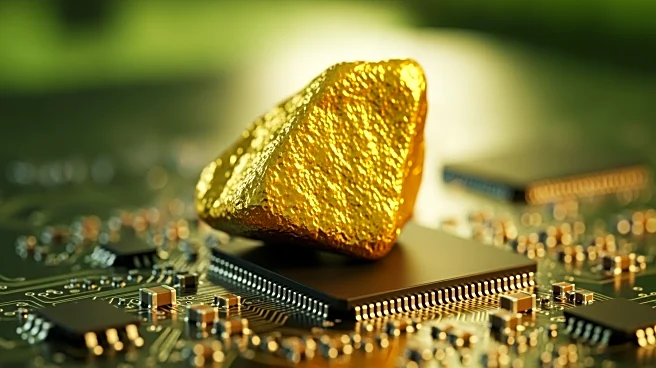
Gold prices have reached unprecedented levels, exceeding $4,000 an ounce, which is causing significant disruptions in global manufacturing supply chains, particularly affecting the technology sector. The surge in gold prices is attributed to investors seeking safe havens amid economic uncertainties, including sanctions, trade wars, and fears of an AI bubble burst. This situation is compelling electronics manufacturers to address their heavy reliance on gold, a critical component in circuit boards due to its excellent conductivity and resistance to corrosion. Emma Armstrong, a Sustainable Electronics Ambassador at In2tec, advocates for modular technology that facilitates the recycling and reuse of gold, thereby mitigating supply chain risks and reducing
environmental impact.
Why It's Important?
The rising cost of gold poses a substantial challenge to the technology industry, which relies heavily on the metal for manufacturing electronic devices. This situation underscores the urgent need for sustainable practices in electronics manufacturing. By adopting modular technology, the industry can reduce its dependency on newly mined gold and instead focus on recycling gold from electronic waste. This approach not only addresses environmental concerns but also offers economic benefits by creating additional revenue streams through the resale of valuable components. The shift towards sustainable electronics is crucial for maintaining the industry's viability in the face of resource scarcity and rising material costs.
What's Next?
The technology sector is likely to see increased investment in sustainable practices and technologies that promote the recycling and reuse of materials. Companies may explore partnerships with innovators like In2tec to implement modular technology solutions. Additionally, there could be a push for regulatory frameworks that encourage or mandate sustainable practices in electronics manufacturing. As the industry adapts, stakeholders will need to balance the technical challenges of implementing new processes with the economic and environmental benefits they offer.
Beyond the Headlines
The move towards sustainable electronics could have far-reaching implications beyond immediate economic and environmental benefits. It may lead to a cultural shift in consumer behavior, with increased awareness and demand for products that are environmentally friendly and sustainable. This could also drive innovation in other sectors, such as renewable energy and medical technology, by ensuring a steady supply of recycled materials. Furthermore, the emphasis on sustainability could enhance corporate reputations and foster greater trust among consumers and investors.