
What's Happening?
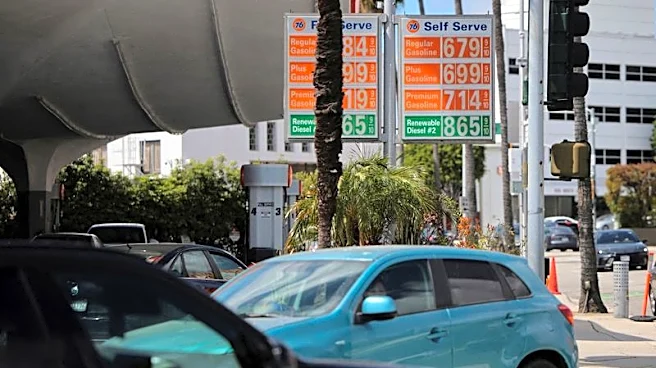
Gas prices in the United States experienced a record monthly increase of 21.2% in March, largely attributed to the ongoing conflict with Iran. This spike surpassed the previous record set in June 2009.
The increase in gas prices accounted for a significant portion of the overall rise in the consumer price index (CPI) for March. A Pew Research Center survey indicated that 69% of Americans are concerned about the impact of the conflict on energy prices. Despite a recent ceasefire agreement between the U.S. and Iran, the effects on gas prices remain significant, with the national average reaching $4.153 per gallon.
Why It's Important?
The sharp increase in gas prices has substantial implications for the U.S. economy and consumers. Higher fuel costs act as a 'gasoline tax,' reducing disposable income and potentially curbing consumer spending in other areas. This situation poses challenges for household budgets, particularly for those reliant on commuting. The conflict's impact on energy prices also affects other sectors, such as airlines, which have seen fare increases. The situation underscores the vulnerability of energy markets to geopolitical tensions and the need for strategies to mitigate such impacts on the economy.
What's Next?
While the recent ceasefire between the U.S. and Iran may offer some relief, gas prices are expected to remain volatile. Analysts suggest that even if prices begin to decline, the economic impact will persist. Consumers may need to adjust their spending habits, such as reducing travel or dining out, to accommodate higher fuel costs. Policymakers and industry stakeholders will likely focus on strategies to stabilize energy markets and explore alternative energy sources to reduce dependency on volatile regions. The situation may also prompt discussions on energy policy and infrastructure investments to enhance energy security.