



What's Happening?
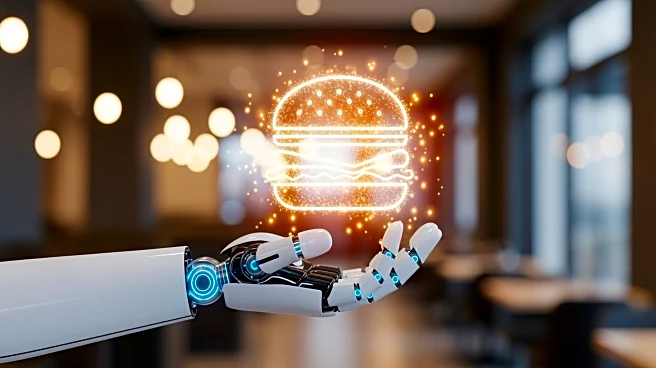
McDonald's is conducting a pilot program in Shanghai to test humanoid robots in a restaurant setting. The initiative involves robots developed by Keenon Robotics, which are tasked with greeting customers, providing information, delivering food, and collecting
trays. This trial is part of McDonald's broader exploration into automation within its operations, aiming to potentially reduce reliance on human staff. The robots used in this pilot include both humanoid-style and wheeled service units equipped with screens, designed for interaction and logistics. The trial is currently limited to a single location and is described as an experimental deployment rather than a full-scale rollout. The robots are capable of handling structured tasks, but their long-term role in complex service environments remains uncertain.
Why It's Important?
The introduction of humanoid robots in McDonald's Shanghai restaurant represents a significant step in the integration of automation in customer service roles. This move could potentially transform the fast-food industry by reducing labor costs and increasing efficiency. However, it also raises questions about the impact on employment, as automation could lead to a reduction in human staff. The trial reflects a broader trend in the robotics industry, where companies are increasingly experimenting with AI-powered systems in public-facing roles. While the current deployment is limited, it offers a glimpse into the future of service robotics and its potential to reshape consumer interactions in everyday settings.
What's Next?
As the trial progresses, McDonald's and Keenon Robotics will likely assess the performance and reliability of the robots in a real-world environment. The outcome of this pilot could influence future decisions regarding the expansion of automation in McDonald's operations. Stakeholders, including employees and industry analysts, will be watching closely to see how this technology is integrated and its impact on the workforce. If successful, similar trials could be conducted in other locations, potentially leading to a broader adoption of service robots in the fast-food industry.
Beyond the Headlines
The deployment of humanoid robots in a public setting like McDonald's highlights the ethical and societal implications of automation. As robots take on more roles traditionally held by humans, there is a need to address concerns about job displacement and the future of work. Additionally, the trial raises questions about the cost-effectiveness and reliability of robots in dynamic environments. The visibility of this trial could also influence public perception of robotics, as consumers become more accustomed to interacting with machines in everyday scenarios.