






What's Happening?
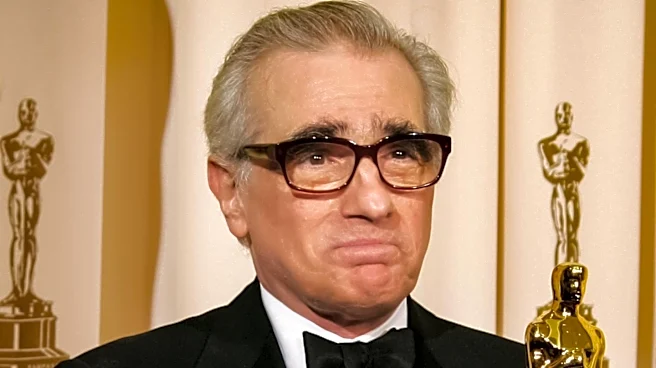
Martin Scorsese, a renowned filmmaker, has announced his investment in an AI company and his use of AI technology to create storyboards, which has led to significant backlash from the film industry. Scorsese has partnered with Black Forest Labs, a German-based
company specializing in text-to-image generative AI. He expressed his interest in the intersection of technology and storytelling, aiming to enhance creativity and efficiency in filmmaking. Scorsese stated that AI allows him to communicate his vision more clearly to his creative team, which he finds creatively freeing. However, this move has been criticized by storyboard and concept artists, who feel that it undermines their work. Artists like Karla Ortiz and Samuel Deats have voiced their disapproval, arguing that AI technology relies on the work of countless artists and that Scorsese's decision disrespects his peers.
Why It's Important?
The use of AI in creative processes like filmmaking raises significant ethical and professional concerns within the industry. Scorsese's decision to use AI for storyboarding highlights a growing trend where technology is increasingly integrated into artistic fields, potentially reducing the demand for traditional roles such as storyboard artists. This development could lead to a shift in how creative work is valued and compensated, impacting employment and the creative process itself. The backlash from industry professionals underscores the tension between technological advancement and the preservation of traditional artistic methods. As AI continues to evolve, the film industry may face challenges in balancing innovation with respect for artistic integrity and the livelihoods of creative professionals.
What's Next?
The controversy surrounding Scorsese's use of AI in storyboarding may prompt further discussions within the film industry about the ethical implications of AI technology. Industry stakeholders, including filmmakers, artists, and unions, might engage in dialogue to establish guidelines or standards for AI use in creative processes. Additionally, there could be increased advocacy for the protection of artists' rights and the recognition of their contributions in an AI-driven landscape. As AI technology becomes more prevalent, the industry may need to adapt by redefining roles and exploring new ways to integrate technology while preserving artistic value.