


What's Happening?
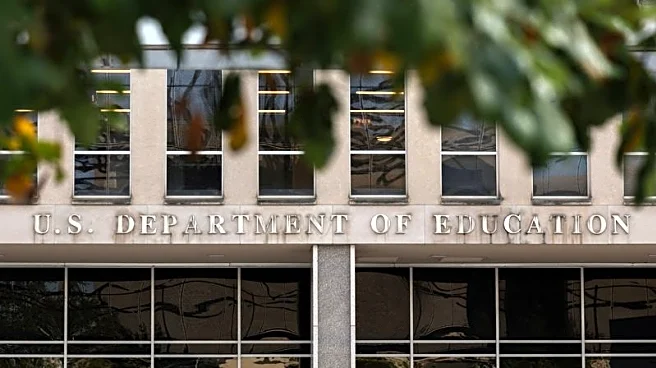
The Treasury Department is set to take over the management of student loans in default, following a new agreement announced on Thursday. This move is part of President Trump's broader plan to dismantle the U.S. Education Department. The agreement marks
a significant shift in the administration of federal student loan programs, which have been under the Education Department's oversight for over 40 years. The transition involves the Treasury Department assuming responsibility for defaulted loans, which amount to approximately $180 billion, representing 11% of the government's $1.7 trillion student loan portfolio. The agreement also outlines a second phase where the Treasury will take operational responsibility for non-defaulted loans, although no specific timeframe has been provided for this phase.
Why It's Important?
The transfer of student loan management to the Treasury Department is a critical component of President Trump's strategy to dismantle the Education Department. This realignment could have significant implications for millions of Americans with student loans, particularly those in default. The move may streamline the management of these loans but also raises concerns about the future of federal education policy and the support systems available to borrowers. The shift could impact how student loans are serviced and collected, potentially affecting borrowers' financial stability and access to education funding. Additionally, the dismantling of the Education Department could lead to broader changes in federal education policy, affecting schools, educators, and students nationwide.
What's Next?
As the Treasury Department prepares to take over the management of defaulted student loans, borrowers are advised to continue working with their current loan servicers. The Trump administration has announced a delay in plans to withhold pay from borrowers who default on their loans, providing temporary relief. However, borrowers in default may still face wage garnishment and federal tax refund withholding. The transition's second phase, involving non-defaulted loans, remains without a set timeline, leaving uncertainty about future changes in loan management. Stakeholders, including Congress and education advocacy groups, may respond to these developments, potentially influencing the implementation and impact of the transition.