





What's Happening?
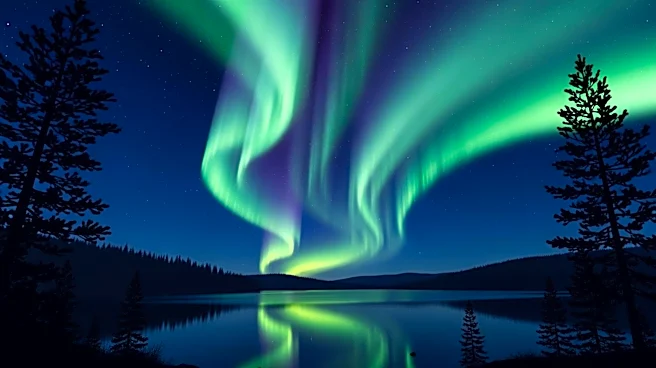
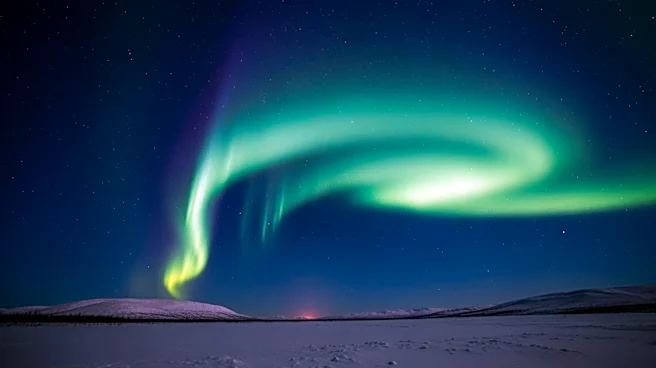
The National Oceanic and Atmospheric Administration (NOAA) has forecasted that the northern lights, or aurora borealis, may be visible across eight U.S. states, particularly those along the US-Canadian border. While the likelihood of visibility is low,
the best chances are in Alaska, with potential sightings in Idaho, Michigan's Upper Peninsula, Minnesota, Montana, North Dakota, Washington, and Wisconsin. The aurora is expected to be most visible between 10 p.m. and 2 a.m., with a Kp index of 4 indicating moderate geomagnetic activity.
Why It's Important?
The potential visibility of the northern lights presents a unique opportunity for residents and visitors in these states to witness a rare natural phenomenon. Such events can boost local tourism, as enthusiasts travel to areas with optimal viewing conditions. Additionally, the aurora borealis serves as a reminder of the Earth's dynamic atmospheric processes, sparking interest in science and astronomy. The event also highlights the importance of preserving dark skies, free from light pollution, to fully appreciate celestial displays.
What's Next?
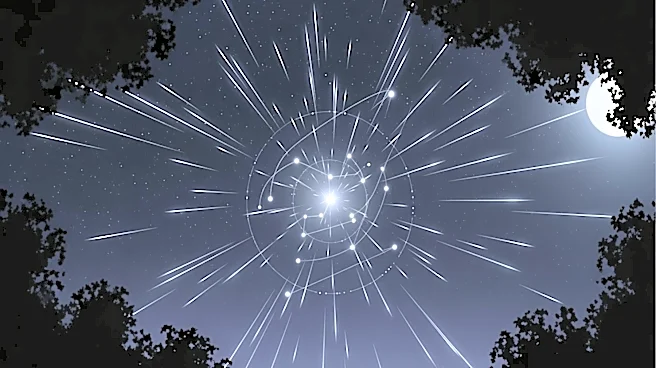
As the northern lights may be visible, local communities and tourism boards might organize viewing events or provide guidance on the best locations for observation. This could include educational programs about the science behind the aurora and its cultural significance. In the long term, increased interest in such phenomena could lead to more initiatives aimed at reducing light pollution and promoting environmental awareness. The ongoing Eta Aquarid meteor shower also offers additional opportunities for stargazing and public engagement with astronomy.