







What's Happening?
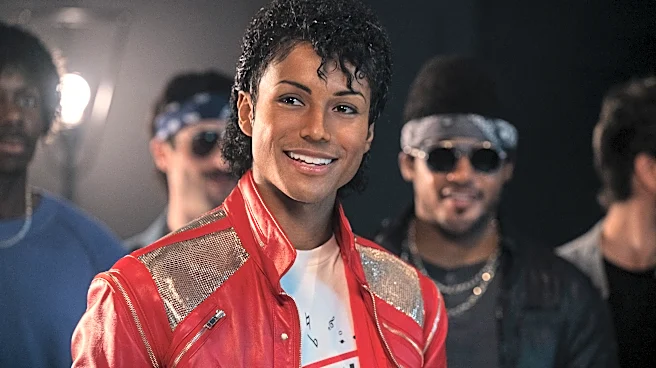
A new biopic about Michael Jackson, directed by Antoine Fuqua and featuring Jackson's nephew Jaafar Jackson, has opened to significant box office success despite negative reviews and the lingering shadow of past child sex abuse allegations. This resurgence
in Jackson's legacy contrasts sharply with the current situation of Kanye West, now known as Ye, who faces significant backlash and cancellations of his performances in Europe due to his history of antisemitic remarks. While Jackson's posthumous portrayal is being embraced by audiences, West's living presence and recent controversies have led to public and institutional pushback, highlighting a complex dynamic in how society chooses to forgive or condemn public figures.
Why It's Important?
The contrasting public and institutional responses to Michael Jackson and Kanye West underscore a broader societal debate about accountability and forgiveness. Jackson's biopic success suggests that time and death can soften public perception, allowing audiences to separate art from the artist. In contrast, West's ongoing controversies and the immediate nature of his actions have led to a more severe public and institutional response. This situation reflects how different factors, such as temporal distance and the nature of the allegations, influence public and institutional willingness to forgive or continue supporting artists. The case also raises questions about the role of fan loyalty and the impact of cultural and ethical considerations on the entertainment industry.
What's Next?
As the public continues to engage with Jackson's biopic and West's career faces challenges, the entertainment industry may need to navigate the complexities of public forgiveness and accountability. Stakeholders, including artists, producers, and sponsors, will likely assess the risks and benefits of associating with controversial figures. The ongoing discourse may influence future decisions about collaborations, endorsements, and the portrayal of artists with controversial pasts. Additionally, the response from younger audiences, particularly Gen Z, could shape the industry's approach to legacy management and the separation of art from the artist.
Beyond the Headlines
The differing treatment of Jackson and West highlights deeper cultural and ethical questions about how society reconciles artistic contributions with personal misconduct. The entertainment industry may face increasing pressure to address these issues transparently and consistently. The situation also reflects broader societal trends in risk management and the influence of public opinion on corporate and institutional decisions. As audiences become more diverse and vocal, the industry may need to adapt its strategies to align with evolving cultural values and expectations.