



What's Happening?
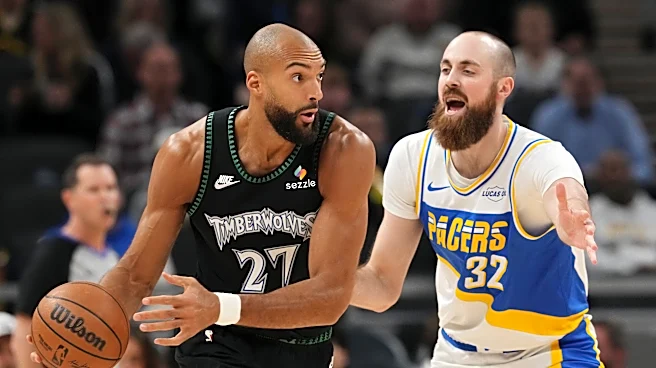
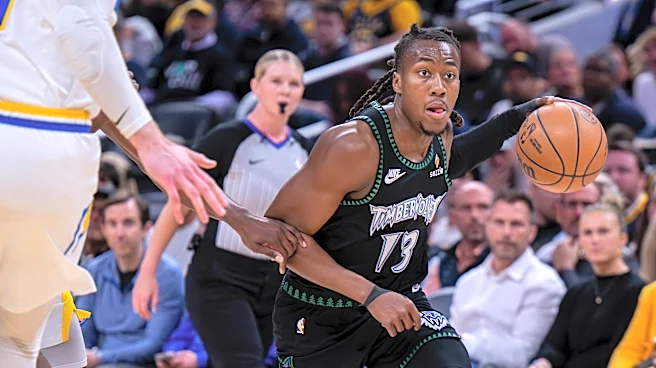
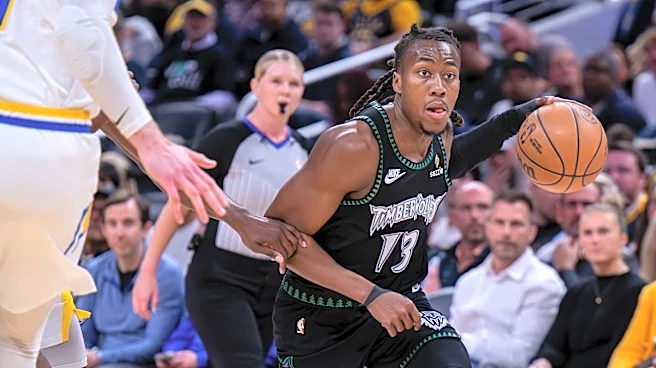
In a recent NBA game, the Minnesota Timberwolves faced off against the Orlando Magic, where second-year guard Terrence Shannon Jr. delivered a standout performance. Under the guidance of coach Chris Finch, Shannon scored a career-high 33 points, marking
a significant achievement as he had previously not scored more than 25 points in an NBA game. Shannon's performance included making 11 of his 14 shots, with 5 out of 7 successful three-pointers, and contributing 5 assists. Despite the Timberwolves resting key players like Anthony Edwards and Rudy Gobert, Shannon's efforts were a highlight in a game that ended with a 132-120 loss to the Magic. Finch also noted the need for players like Naz Reid to improve their game without fouling, as Reid showed promising performance in consecutive games.
Why It's Important?
Terrence Shannon Jr.'s performance is significant as it showcases the depth and potential within the Timberwolves' roster, especially as they approach the playoffs. Shannon's ability to step up in the absence of key players could provide the team with additional strategic options. His performance also highlights the effectiveness of Chris Finch's coaching in developing young talent. For the Timberwolves, having players like Shannon ready to contribute in high-stakes games could be crucial for their playoff success. Additionally, the focus on reducing fouls, as emphasized by Finch, is critical for maintaining competitive play and minimizing opponent scoring opportunities.
What's Next?
As the Timberwolves prepare for the playoffs, the team will likely continue to develop their bench players, including Shannon, to ensure readiness for various game scenarios. Coach Finch's emphasis on reducing fouls and improving player poise will be a focus in upcoming training sessions. The team will also monitor the recovery of key players like Anthony Edwards to ensure a strong lineup for the playoffs. Shannon's performance may lead to more opportunities for him to play a significant role in future games, potentially impacting the team's strategy and rotation.