
What's Happening?
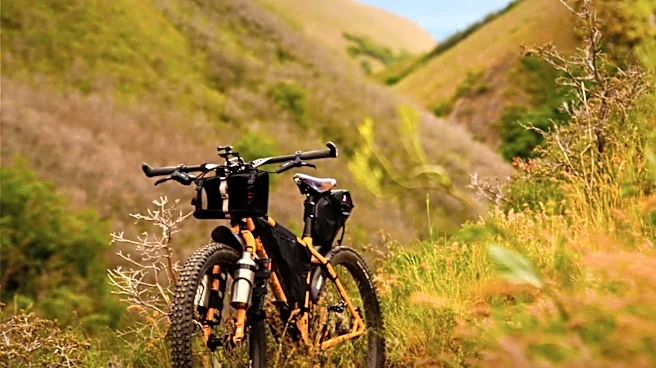
Bikepacking, a blend of bike touring and backpacking, is gaining traction among cycling enthusiasts. This activity involves carrying all necessary gear on a bike for multi-day trips, often on backroads,
dirt paths, and mountain trails. Unlike traditional bike touring, which typically occurs on paved roads with heavy racks, bikepacking emphasizes lightweight gear suited for rough terrain. The convergence of these two disciplines has led to a growing interest in exploring off-the-beaten-path destinations while engaging with local cultures. Participants often use dry bags and stuff sacks to organize their gear, ensuring essentials like sleeping bags and electronics remain dry. The trend is particularly popular in areas like New York, where cyclists can embark on routes that offer both convenience and adventure.
Why It's Important?
The rise of bikepacking reflects a broader shift towards sustainable and immersive travel experiences. As more individuals seek to connect with nature and explore remote areas, bikepacking offers a unique way to do so while minimizing environmental impact. This trend could influence the outdoor recreation industry, prompting companies to develop specialized gear and services tailored to bikepackers. Additionally, local economies may benefit from increased tourism as cyclists visit rural areas and support small businesses along their routes. The emphasis on planning and self-sufficiency also fosters a sense of community among participants, who often share knowledge and resources during group trips.
What's Next?
As bikepacking continues to grow in popularity, there may be increased demand for infrastructure that supports this activity, such as dedicated trails and campsites. Outdoor brands are likely to innovate further, creating gear that enhances the bikepacking experience. Additionally, cycling groups and adventure companies may expand their offerings to cater to newcomers, providing guided trips and educational resources. The trend could also inspire collaborations between local governments and tourism boards to promote bikepacking as a sustainable travel option.
Beyond the Headlines
Bikepacking's rise highlights a cultural shift towards valuing experiences over material possessions. Participants often prioritize minimalism and self-reliance, which can lead to a deeper appreciation for nature and personal growth. The activity also encourages physical fitness and mental resilience, as cyclists navigate challenging terrains and weather conditions. Furthermore, bikepacking can serve as a platform for environmental advocacy, with participants raising awareness about conservation efforts and responsible outdoor practices.