
What's Happening?
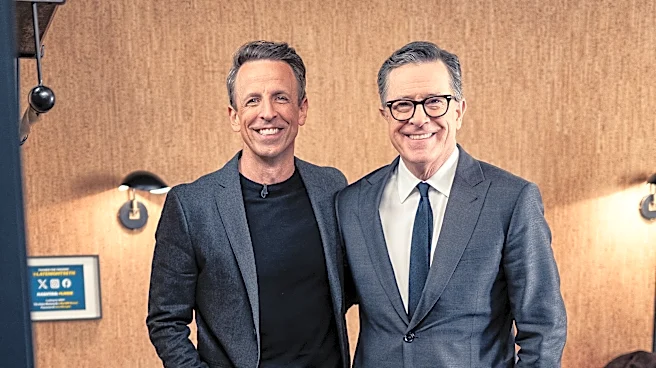
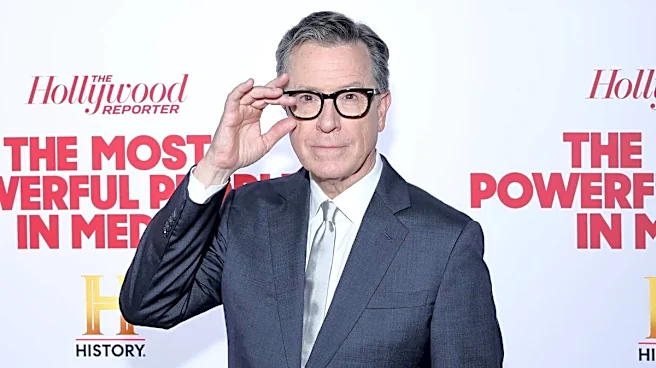
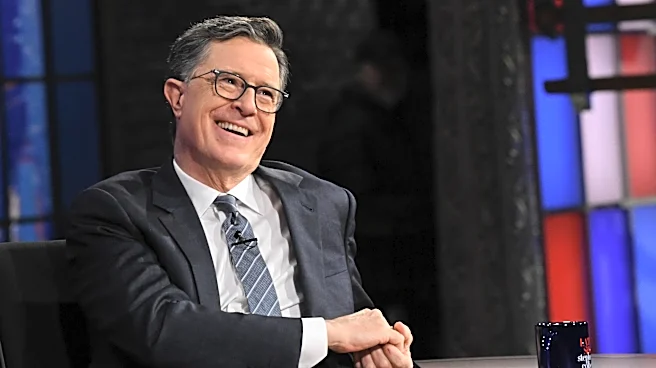
Jimmy Kimmel has publicly criticized CBS for canceling Stephen Colbert's 'The Late Show,' which aired its final episode on May 21, 2026. Kimmel, who hosts a rival late-night show, expressed his disapproval
of the decision, suggesting that those responsible for the cancellation should feel ashamed. Despite being on competing networks, Kimmel and Colbert have maintained a friendly relationship, often appearing on each other's programs. Kimmel announced he would take a night off in solidarity with Colbert and encouraged his audience to watch Colbert's final episode, but advised them to boycott CBS thereafter. CBS had announced the show's cancellation the previous summer, citing financial losses despite its high ratings. Kimmel has dismissed these claims as false, arguing that the financial reasoning does not align with his understanding of late-night television economics.
Why It's Important?
The cancellation of 'The Late Show' with Stephen Colbert marks a significant shift in the late-night television landscape. Colbert's show was known for its high ratings and influential commentary on current events, making its cancellation a notable event in the entertainment industry. The decision by CBS has sparked criticism, particularly from fellow late-night host Jimmy Kimmel, highlighting tensions within the industry regarding network decisions and their impact on popular programming. The move also raises questions about the financial strategies of major networks and their prioritization of mergers and acquisitions over content. The cancellation could affect CBS's viewership and reputation, especially if Kimmel's call for a boycott gains traction among audiences.
What's Next?
Following the cancellation, CBS may face backlash from viewers and industry professionals who supported Colbert's show. The network will need to address the criticism and potentially reassess its programming strategy to maintain its audience. Meanwhile, Stephen Colbert's departure from late-night television leaves a gap that other networks may seek to fill, potentially leading to shifts in programming and competition. Kimmel's public stance against CBS could influence other industry figures to speak out, potentially leading to broader discussions about network decision-making and its impact on creative content. The situation may also prompt CBS to consider new formats or hosts to replace Colbert's show and retain its late-night audience.