




What's Happening?
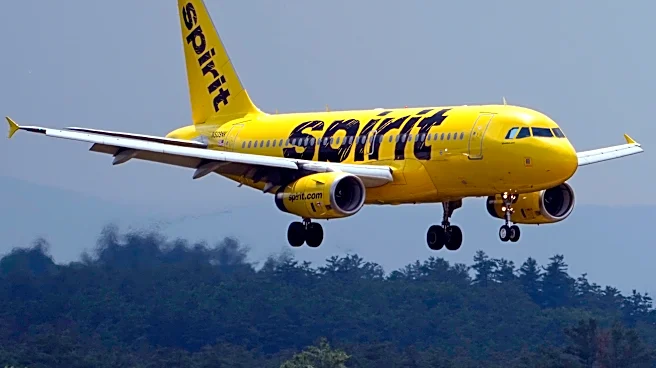
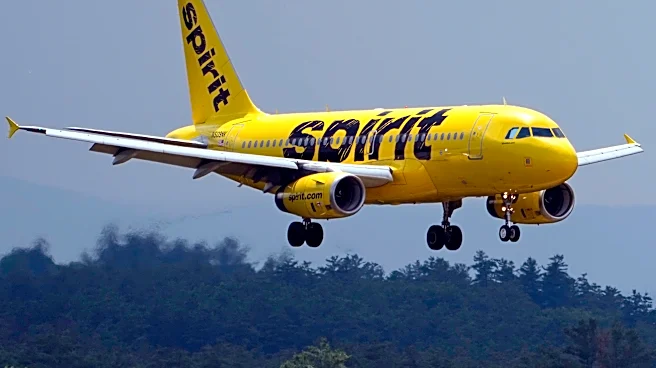
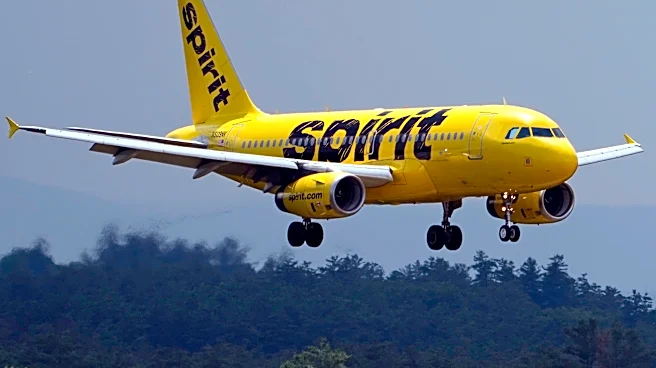
Spirit Airlines, known for its ultra-low-cost fares and distinctive yellow planes, announced on May 2, 2026, that it is going out of business after 34 years. The airline has ceased all operations and canceled all flights, leaving passengers without customer
service support. The decision follows financial struggles exacerbated by rising fuel costs and debt accumulation. Despite discussions of a potential bailout by the Trump administration, no agreement was reached. The airline's closure affects approximately 17,000 employees and leaves a significant gap in the budget travel market. Spirit's financial difficulties have been ongoing, with multiple bankruptcy filings and a substantial reduction in market share and passenger numbers.
Why It's Important?
The closure of Spirit Airlines represents a major shift in the U.S. airline industry, particularly affecting budget travelers who relied on its low-cost services. The loss of Spirit could lead to higher airfares and reduced competition, impacting consumer choice and affordability. The shutdown also poses significant economic challenges, with potential job losses for Spirit's employees and related industries. The situation highlights the financial vulnerabilities within the airline sector, particularly for low-cost carriers facing economic pressures. The absence of Spirit in key markets like Las Vegas and Florida could lead to increased demand and pricing pressures on remaining carriers.
What's Next?
Passengers are advised to seek refunds through credit card companies or travel insurance policies, as Spirit will not assist with rebooking. The bankruptcy process will address claims for those who used alternative payment methods. Other airlines may offer special fares to accommodate affected passengers, but capacity is limited. The closure may prompt regulatory discussions on financial oversight and support mechanisms for struggling airlines. Competitors may adjust their strategies to capture Spirit's market share, potentially leading to changes in route offerings and pricing. The long-term impact on the airline industry and consumer travel patterns remains to be seen.