
What's Happening?
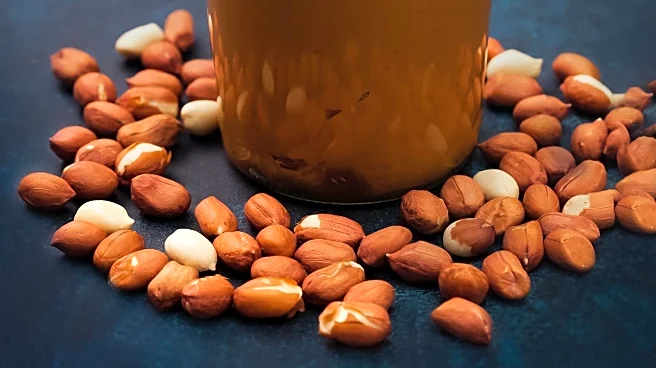
Peanut butter, a popular food item, is often perceived as a high-protein source. However, a two-tablespoon serving contains only about 7 grams of protein, according to the USDA. Nutrition experts suggest
that while peanut butter is nutritious, it should be part of a balanced meal rather than a primary protein source. Registered dietitian Caroline Thomason advises pairing peanut butter with other foods like fruits or whole grains to create a more balanced meal. The article also highlights other protein-rich foods, such as chicken, lentils, and Greek yogurt, which offer higher protein content per serving.
Why It's Important?
As dietary trends emphasize higher protein intake for satiety and muscle maintenance, understanding the protein content of common foods like peanut butter is essential. While peanut butter offers nutritional benefits, relying on it as a primary protein source may not meet dietary needs efficiently. This information helps consumers make informed choices about their protein sources, encouraging a more balanced and varied diet. Highlighting alternative protein-rich foods provides options for those seeking to increase their protein intake without excessive calorie consumption, supporting overall health and wellness goals.