


What's Happening?
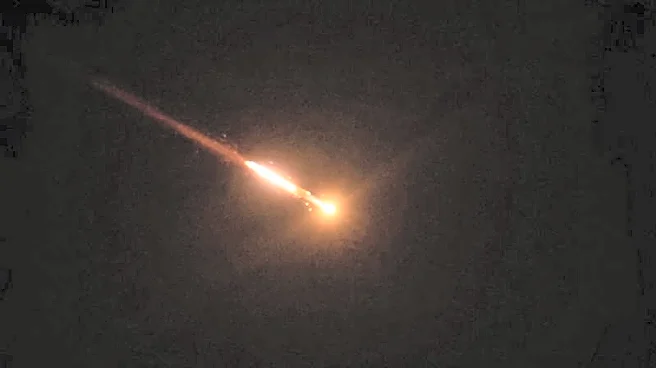
The ongoing conflict involving Iran has led to significant disruptions in global oil supply, particularly due to the closure of the Strait of Hormuz. This strategic waterway is crucial as it handles about 20% of the world's oil supply. The situation is exacerbated
by threats from Yemen to close the Bab el-Mandeb Strait, potentially halting an additional 4% of global oil flow. These disruptions are expected to drive oil prices up to approximately $100 per barrel. The U.S. auto industry, particularly the electric vehicle (EV) market, is experiencing fluctuations as a result. While there was a surge in EV sales in the third quarter due to expiring tax credits, sales have since softened. However, the recent spike in gas prices has renewed interest in EVs, as consumers seek alternatives to traditional gasoline vehicles.
Why It's Important?
The disruption in oil supply due to the Iran conflict has significant implications for the U.S. economy and the global auto industry. Rising oil prices can lead to increased costs for consumers and businesses, potentially slowing economic growth. For the auto industry, this situation presents both challenges and opportunities. While higher gas prices may deter consumers from purchasing traditional vehicles, they could accelerate the shift towards electric vehicles. This shift could benefit U.S. automakers that have invested in EV technology, but it also poses a risk to those heavily reliant on gasoline-powered vehicles. The situation underscores the importance of energy diversification and the potential for electric vehicles to gain a larger market share.
What's Next?
The future of the U.S. auto industry in light of the Iran conflict will depend on several factors, including the duration of the conflict and the response of global oil markets. U.S. automakers may need to reassess their production strategies, potentially increasing investment in electric vehicle technology to meet changing consumer demands. Additionally, government policies and incentives could play a crucial role in shaping the industry's response. If the conflict persists, it could lead to more aggressive moves towards renewable energy sources and further development of EV infrastructure. Stakeholders will be closely monitoring the situation to adapt their strategies accordingly.
Beyond the Headlines
The Iran conflict highlights broader geopolitical risks that can impact global supply chains and economic stability. It also raises questions about energy security and the need for sustainable alternatives to fossil fuels. The situation could accelerate the transition to renewable energy sources, as countries seek to reduce their dependence on volatile oil markets. This shift could have long-term implications for global energy policies and the automotive industry, potentially leading to increased innovation and investment in clean energy technologies.