

What's Happening?
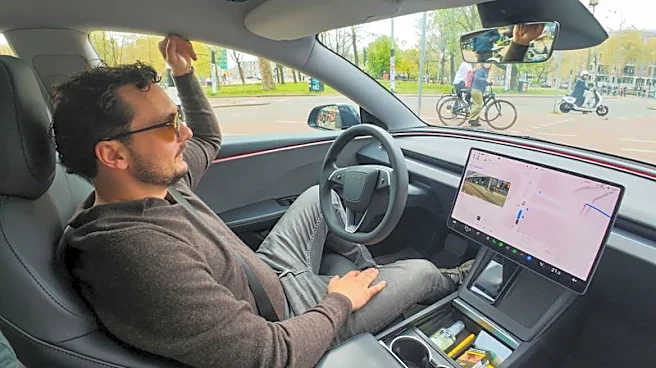
A passenger in Dallas experienced a series of issues during a ride in a Tesla robotaxi, highlighting both the potential and limitations of autonomous driving technology. Chris Ramos, an accounts payable supervisor, attempted to use Tesla's robotaxi service,
which recently launched in Dallas. During the ride, the vehicle unexpectedly slowed down on a highway, creating a safety concern as traffic sped by. A Tesla representative intervened to guide the car safely. The ride also included navigation errors, such as missing the final destination and getting stuck in a loop around a hotel. Despite these challenges, Ramos noted that the car handled city driving smoothly.
Why It's Important?
The incident underscores ongoing challenges in the deployment of autonomous vehicles, particularly regarding safety and reliability. As companies like Tesla push forward with driverless technology, public trust remains a significant hurdle. Incidents like this can impact consumer confidence and highlight the need for robust safety measures and effective human oversight. The broader implications for the automotive industry include potential regulatory scrutiny and the necessity for continuous technological improvements to ensure passenger safety and system reliability.
What's Next?
Tesla may need to address the reported issues to improve the reliability and safety of its robotaxi service. This could involve software updates, enhanced navigation systems, and more rigorous testing protocols. The company might also face increased scrutiny from regulators and the public, prompting discussions about the standards and regulations governing autonomous vehicles. As the technology evolves, Tesla and other companies in the sector will need to balance innovation with safety to gain public trust and achieve widespread adoption.