



What's Happening?
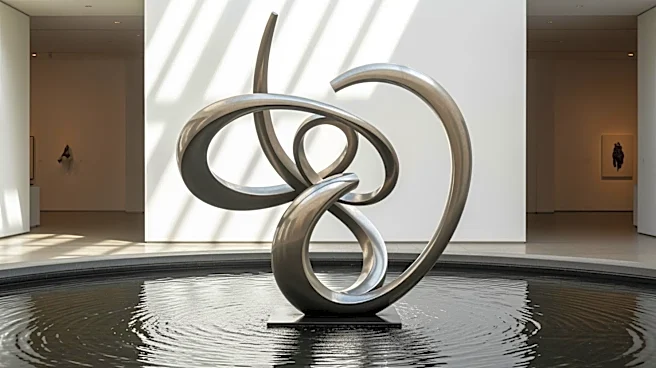
The Los Angeles County Museum of Art (LACMA) has reinstalled Alexander Calder's 1964 fountain sculpture, 'Three Quintains (Hello Girls),' at its new David Geffen Galleries. This installation marks a significant moment for the museum, as the sculpture was
one of its first commissions and has faced various challenges over the years. Originally situated in pools that allowed visitors to walk through, the sculpture encountered issues such as calcium deposits and environmental factors that affected its condition. In the 1980s, it was moved to a hillside in the sculpture garden and later displayed at Pasadena's Art Center College of Design. The new installation features advanced filtration systems to address outdoor environmental challenges, allowing the sculpture to be surrounded by water as Calder intended. The sculpture is now located near the museum's main cafe and the W.M. Keck Education Center, where it is expected to attract and delight visitors, including children.
Why It's Important?
The reinstallation of Calder's 'Three Quintains (Hello Girls)' at LACMA's David Geffen Galleries is significant for several reasons. It highlights the museum's commitment to preserving and showcasing important works of modern art, reinforcing its status as a leading cultural institution. The sculpture's presence in the new galleries enhances the visitor experience by providing a dynamic and interactive element that engages audiences of all ages. Additionally, the installation reflects the museum's dedication to maintaining the integrity of its collections, as it has invested in advanced technology to ensure the sculpture's longevity in an outdoor setting. This move also underscores the importance of public art in urban environments, offering a space for reflection and enjoyment amidst the bustling cityscape.
What's Next?
With the sculpture now installed at the David Geffen Galleries, LACMA anticipates increased visitor engagement and interest in its modern art offerings. The museum may continue to explore opportunities to integrate more site-specific works into its exhibitions, enhancing the overall experience for patrons. As the sculpture becomes a focal point of the galleries, LACMA might also consider hosting events or educational programs centered around Calder's work and its historical significance. The successful reinstallation could inspire other institutions to revisit and restore their own collections, promoting the preservation of cultural heritage.
Beyond the Headlines
The reinstallation of Calder's sculpture at LACMA not only revitalizes a historical piece but also raises broader questions about the role of public art in society. It challenges traditional notions of static art by emphasizing movement, color, and interaction, encouraging viewers to engage with art in new ways. This approach aligns with contemporary trends in museum curation, where experiential and participatory elements are increasingly valued. Furthermore, the sculpture's presence in a high-traffic area of the museum highlights the importance of accessibility in art, making it available to a diverse audience and fostering inclusivity in cultural spaces.