





What's Happening?
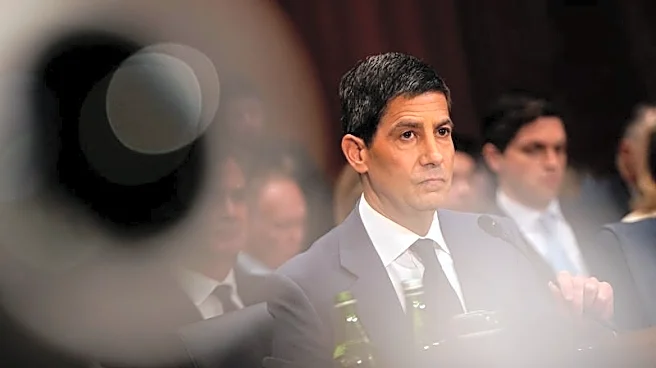
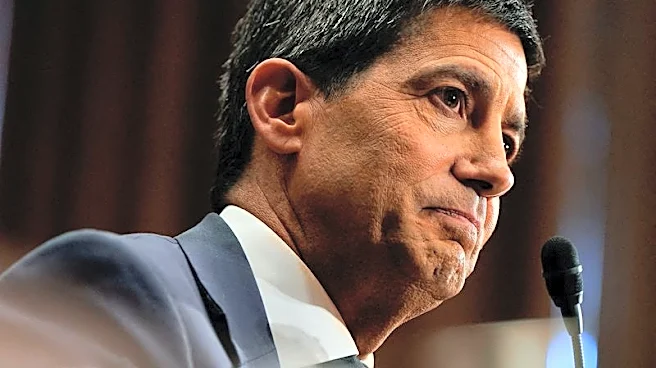
Kevin Warsh, recently confirmed by the U.S. Senate as the new Federal Reserve Chair, plans to reduce the central bank's involvement in financial markets. This strategy aims to return to a more traditional monetary policy focused on controlling inflation
and minimizing market distortions. However, analysts warn that Warsh's approach could be complicated by the rising federal debt and the diminishing appeal of U.S. Treasuries. Hanno Lustig, a finance professor at Stanford University, suggests that the U.S. may have lost its 'convenience yield,' a lowered rate on government debt for countries with risk-free standing. This could lead to increased long-term interest rates, affecting businesses, households, and government borrowing costs. Warsh's plan to shrink the Fed's balance sheet, which currently holds about $6.7 trillion in assets, may face challenges if the Treasury's debt-issuance decisions influence rates as the Fed reduces its holdings.
Why It's Important?
The Federal Reserve's strategy under Warsh could significantly impact the U.S. economy, particularly in terms of interest rates and market stability. A reduction in the Fed's balance sheet might lead to higher borrowing costs, affecting economic growth and consumer spending. The potential loss of the 'convenience yield' could make U.S. Treasuries less attractive, increasing the cost of federal borrowing. This situation underscores the delicate balance the Fed must maintain between reducing its market footprint and supporting economic growth. Warsh's approach may also require closer coordination with the U.S. Treasury to manage the effects on interest rates and ensure financial stability.
What's Next?
As Warsh implements his plan, the Federal Reserve will need to navigate the complexities of reducing its balance sheet while maintaining economic stability. This may involve transparent communication with market participants to manage expectations and avoid disruptions. The Fed's actions will likely be closely monitored by financial markets, policymakers, and economic analysts. Additionally, the Fed may need to engage in discussions with the Treasury to align strategies and mitigate potential negative impacts on interest rates and borrowing costs.