




What's Happening?
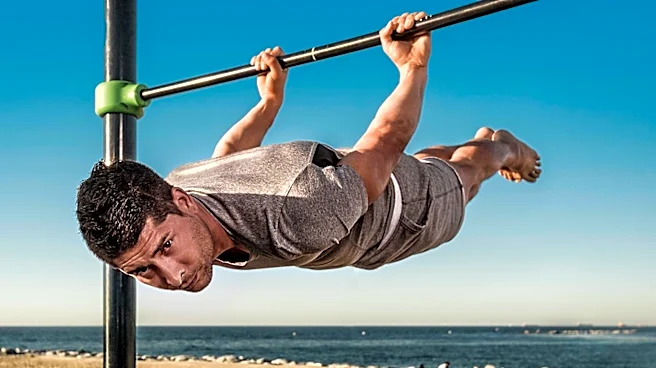
The inverted row hold, a challenging exercise developed by American trainer Joe DeFranco, is gaining attention for its ability to enhance upper back and grip strength. This exercise involves holding a suspended bodyweight position for an extended period,
which not only targets the upper back but also engages the core and glutes. The exercise is a variation of the regular inverted row, made more challenging by elevating the feet and requiring the position to be held as long as possible. DeFranco, who has trained NFL and MLB players, WWE superstars, UFC fighters, and Olympic athletes, emphasizes the difficulty of the exercise, noting its effectiveness in building muscle through increased time under tension.
Why It's Important?
The inverted row hold is significant for athletes and fitness enthusiasts aiming to improve their core stability and grip strength. By engaging multiple muscle groups, this exercise helps in developing better posture and overall body strength. The isometric nature of the hold increases time under tension, which research suggests can be as effective as full repetitions in muscle building. This makes it a valuable addition to training regimens, particularly for those involved in sports requiring strong grip and core stability, such as F1 drivers and other high-performance athletes.
What's Next?
As the inverted row hold gains popularity, it is likely to be incorporated into more training programs for athletes across various sports. Trainers and fitness experts may explore further variations and benchmarks to challenge different skill levels. The exercise's emphasis on core and grip strength could lead to its adoption in rehabilitation programs for athletes recovering from injuries, as it provides a low-impact yet effective workout option.
Beyond the Headlines
The growing interest in exercises like the inverted row hold reflects a broader trend in fitness towards functional training that emphasizes core stability and full-body engagement. This shift is driven by the recognition that such exercises not only improve athletic performance but also contribute to long-term health and injury prevention. As more people seek efficient workouts that deliver comprehensive benefits, exercises that combine strength, stability, and endurance are likely to become staples in both professional and personal fitness routines.