
What's Happening?
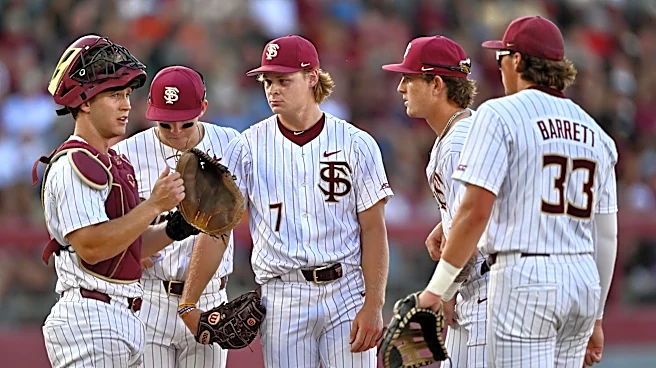
Florida State Athletics Director Michael Alford, who served as the chair of the NCAA Division I Baseball Selection Committee, received positive feedback for his role in the selection of the college baseball
field of 64. During an appearance on ESPN's live selection show, Alford explained that the committee heavily considered the strength of schedule, particularly within expanded conferences, as a key metric. Other metrics included the RPI rating, KPI, and DSR. Despite some controversial decisions, such as selecting Mississippi State over Arkansas as a host site and including Kentucky despite their poor SEC series record, Alford defended these choices based on the teams' overall performance and strength of schedule. The omission of Mercer, despite their strong record, was attributed to their weaker non-conference schedule. ESPN analysts praised the committee for creating a balanced bracket and avoiding repetitive matchups in the Regional and Super Regional rounds.
Why It's Important?
The NCAA baseball selection process is crucial as it determines which teams compete for the national championship, impacting the careers of athletes and the reputation of college programs. Alford's leadership in the selection process highlights the importance of transparency and fairness in sports administration. The decisions made by the committee can influence the perception of the NCAA's commitment to equitable competition, especially when it comes to balancing opportunities between major and mid-major programs. The praise from ESPN analysts suggests a positive reception from influential voices in sports media, which can enhance the credibility of the NCAA's selection process.
What's Next?
As the tournament progresses, the selected teams will compete in the Regional and Super Regional rounds, leading up to the College World Series. The decisions made by the selection committee will continue to be scrutinized as the tournament unfolds, particularly if any controversial selections perform unexpectedly well or poorly. Stakeholders, including college programs and fans, will be watching closely to see if the committee's choices are validated by the outcomes on the field. The feedback from this year's selection process may influence future committee decisions and criteria.