





What's Happening?
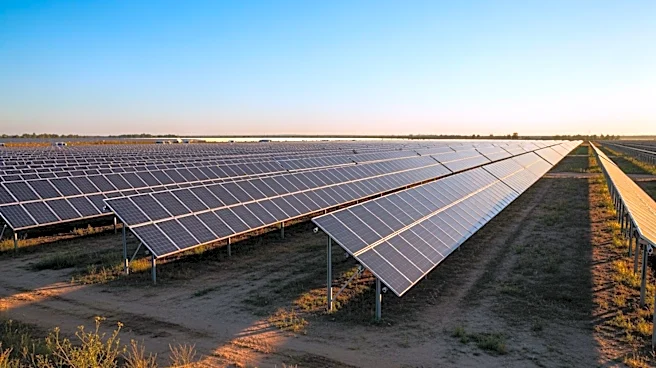
Australian iron-ore mining company Fortescue has commenced the construction of a 690 MW solar farm at Turner River in the Pilbara region. This project is the final solar installation needed to fulfill the company's Real Zero decarbonisation strategy.
Alongside this, Fortescue is also developing a 650 MWh battery energy storage system (BESS) at its Cloudbreak operation, which will work in conjunction with an existing 190 MW solar farm. These initiatives are part of Fortescue's Pilbara Green Grid, an integrated renewable energy system designed to power its operations with sustainable energy. The Turner River solar farm, once completed, will contribute to a total of over 1.4 GW of renewable energy capacity, sufficient to power approximately 500,000 Australian homes. The construction of the solar farm is expected to be completed by 2028, while the Cloudbreak BESS is anticipated to be operational by the 2027 financial year.
Why It's Important?
Fortescue's investment in renewable energy infrastructure is a significant step towards reducing carbon emissions in the mining industry, which is traditionally reliant on fossil fuels. By transitioning to renewable energy sources, Fortescue is setting a precedent for sustainable practices in the sector. This move not only aligns with global efforts to combat climate change but also positions Fortescue as a leader in the green energy transition. The development of solar farms and battery storage systems enhances energy security and reduces dependency on volatile fuel markets, potentially leading to cost savings and increased operational efficiency. Furthermore, the electrification of Fortescue's mining fleet underscores the company's commitment to sustainability and innovation, which could influence other industry players to adopt similar strategies.
What's Next?
As Fortescue progresses with its renewable energy projects, the company is also focusing on electrifying its mobile mining fleet. By the end of 2026, approximately half of its excavator fleet is expected to be electric. The first battery-electric haul truck is anticipated to be operational by the end of the year, supported by a newly commissioned 6 MW fast charger capable of fully charging a haul truck in about 30 minutes. Additionally, Fortescue is testing prototype battery electric equipment from XCMG, which will soon undergo site testing in the Pilbara. The ongoing construction of the 133 MW Nullagine Wind Farm will further diversify Fortescue's renewable energy portfolio. These developments indicate Fortescue's proactive approach to achieving its decarbonisation goals and its potential to influence broader industry trends.