

What's Happening?
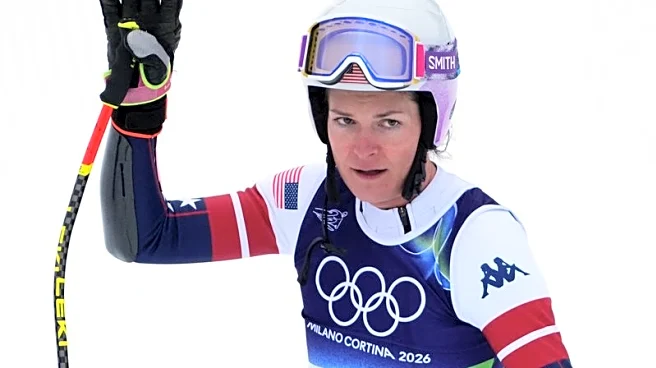
At the 2026 Winter Olympics in Milan and Cortina d'Ampezzo, Italy, Valentine's Day is being celebrated in unique ways by athletes and attendees. Dutch speed skater Jutta Leerdam set an Olympic record in the 1000-meter race and shared a heartfelt moment with her fiancé, Jake Paul, in the stands. U.S. skier Breezy Johnson received a marriage proposal from her longtime boyfriend, Connor Watkins, at the finish line of the women's super-G race. The event also highlights the relationship of Belgian skeleton racer Kim Meylemans and Brazilian Nicole Rocha Silveira, who are competing for their respective countries but share a personal bond. The couple, who married last year, are using the Games to promote visibility for same-sex relationships, especially
in Italy where such unions are not legally recognized.
Why It's Important?
The celebration of Valentine's Day at the Winter Olympics underscores the personal lives of athletes, offering a humanizing glimpse into their experiences beyond competition. These stories of love and commitment resonate with audiences, providing a narrative that contrasts with the intense focus on athletic achievement. The visibility of same-sex couples like Meylemans and Rocha Silveira is particularly significant in promoting inclusivity and acceptance in sports, especially in countries where legal recognition of such relationships is limited. This highlights the role of international sporting events in fostering cultural exchange and challenging societal norms.
What's Next?
As the Winter Olympics continue, the focus will remain on both the athletic performances and the personal stories of the athletes. The visibility of diverse relationships may encourage further dialogue on inclusivity in sports. Additionally, the personal milestones celebrated at the Games could inspire other athletes to share their stories, potentially influencing public perceptions and policies regarding same-sex relationships in sports and beyond.
Beyond the Headlines
The presence of athlete couples at the Olympics, particularly those in same-sex relationships, may have long-term implications for the sports community. It challenges traditional perceptions and encourages a more inclusive environment. The public display of these relationships at a global event like the Olympics can serve as a powerful statement for equality and acceptance, potentially influencing future generations of athletes and fans.