
What's Happening?
Autonomous vehicles are making significant strides in the mining and agriculture sectors, where they are being deployed to enhance efficiency and safety. Unlike the complex urban environments faced by
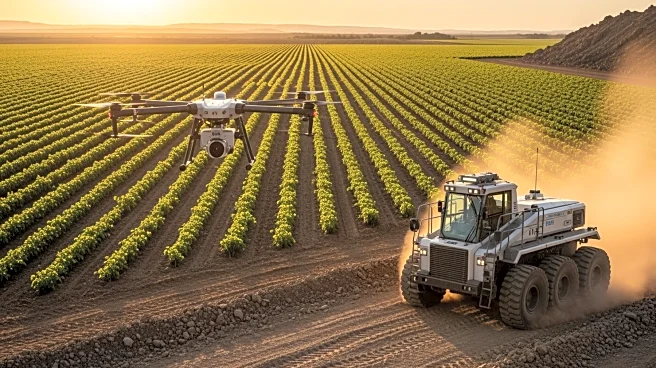
passenger vehicles, these sectors benefit from controlled, off-road settings that allow for predictable and repetitive operations. In mining, autonomous haul trucks and other machinery have been in use for over a decade, reducing human exposure to hazardous conditions and improving productivity. Companies like Komatsu and Caterpillar are leading the charge with their advanced autonomous systems. In agriculture, manufacturers such as John Deere and CNH Industrial are integrating autonomy into tractors and harvesting machinery, focusing on precision and resource utilization. These developments are driven by the need to address labor shortages and seasonal constraints, allowing for extended operating hours and reduced reliance on skilled operators.
Why It's Important?
The adoption of autonomous systems in mining and agriculture is crucial for several reasons. Firstly, it addresses significant safety concerns by minimizing human exposure to dangerous environments. This is particularly important in mining, where conditions can be hazardous. Secondly, these systems enhance productivity by enabling continuous operation without the need for shift changes, thus optimizing asset utilization. In agriculture, autonomy allows for more precise farming practices, which can lead to better yields and resource management. Economically, these sectors provide a stable investment opportunity, as they fit into traditional industrial frameworks with clear return on investment metrics. The controlled environments of these industries also mean that regulatory hurdles are less complex compared to urban autonomous vehicles, allowing for smoother implementation and scaling.
What's Next?
The future of autonomous systems in mining and agriculture looks promising, with continued advancements expected in technology and deployment. As these systems become more sophisticated, we can anticipate further integration into existing workflows, enhancing both safety and efficiency. The focus will likely remain on incremental improvements rather than disruptive changes, ensuring that autonomy continues to be a reliable and profitable solution. Additionally, as labor dynamics evolve, these systems may play a crucial role in addressing workforce challenges, particularly in agriculture where seasonal labor is a concern. Stakeholders, including manufacturers and operators, will continue to collaborate to refine these technologies and expand their applications.
Beyond the Headlines
The success of autonomous systems in these sectors offers valuable lessons for other industries considering automation. The emphasis on safety, reliability, and controlled environments demonstrates that autonomy can thrive when expectations are realistic and objectives are clear. This approach contrasts with the more speculative nature of urban autonomous vehicles, which face greater regulatory and technical challenges. The mining and agriculture sectors highlight the potential for autonomy to drive industrial optimization, providing a blueprint for other industries to follow. As these technologies mature, they may also influence public perceptions of autonomy, showcasing its benefits in practical, real-world applications.