






What's Happening?
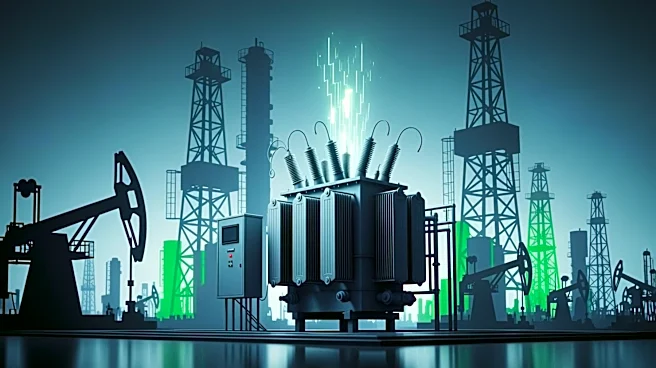
Baker Hughes is making significant strides in the electrification of the oil and gas sector, focusing on reducing carbon footprints, improving reliability, and increasing efficiency. Rodrigo Farias, Vice President of Completions, Interventions, and Measurements
at Baker Hughes, highlights the company's efforts in simplifying systems and reducing costs, particularly in offshore and deepwater environments. Electrification is seen as a key lever for reducing the carbon intensity of upstream operations, with benefits including lower capital and operational expenditures. The shift from hydraulic to electric systems is expected to enhance the reliability and performance of oil and gas operations, especially in challenging environments like deepwater fields.
Why It's Important?
The move towards electrification in the oil and gas industry is crucial for meeting environmental mandates and reducing emissions. By simplifying systems and improving reliability, electrification can significantly lower the total cost of ownership for companies operating in this sector. This transition is particularly important in deepwater environments, where the cost of intervention is high, and reliability is critical for long-term success. The adoption of electric systems can lead to more sustainable and economically viable operations, aligning with global efforts to decarbonize the energy sector.
What's Next?
As Baker Hughes continues to advance its electrification efforts, the focus will likely remain on enhancing the capabilities of electric systems in both new and existing fields. The company is expected to further develop its intelligent completion systems, which integrate real-time monitoring and control to optimize reservoir management. This ongoing innovation will be essential for maintaining competitiveness and meeting the evolving demands of the energy market. Stakeholders in the oil and gas industry will be closely watching these developments as they seek to balance economic and environmental objectives.
Beyond the Headlines
The shift towards electrification in the oil and gas sector represents a broader trend towards digital transformation and automation. By integrating artificial intelligence and advanced monitoring systems, companies like Baker Hughes are not only improving operational efficiency but also enhancing their ability to manage complex reservoirs. This technological evolution could lead to significant changes in how oil and gas fields are developed and managed, with potential implications for workforce skills and industry practices.