


What's Happening?
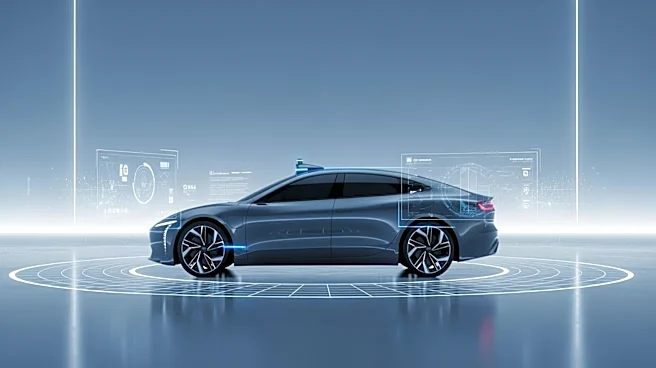
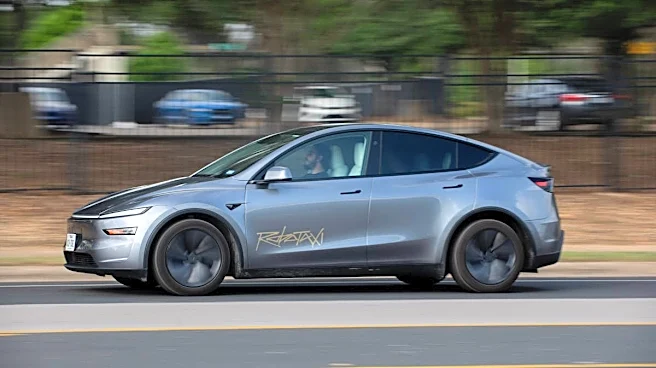
Tesla has announced the expansion of its unsupervised robotaxi service to cover the entire Austin Metro area. This development marks a significant step in Tesla's autonomous vehicle strategy, as the company continues to remove human monitors from its robotaxis,
indicating increased confidence in its self-driving technology. The expansion follows Tesla's initial rollout of the service in Austin last year, which began with human monitors in the vehicles. Despite the expansion, Tesla has not significantly increased its fleet size in Austin, with only 42 registered cars in the state. The company faces competition from Waymo, which has a larger fleet of autonomous vehicles in the area.
Why It's Important?
The expansion of Tesla's robotaxi service is a critical development in the autonomous vehicle industry, showcasing advancements in self-driving technology. It reflects Tesla's commitment to scaling its autonomous services, which could significantly impact the ride-hailing market by reducing operational costs and potentially lowering fares. However, the limited fleet size and competition from established players like Waymo highlight the challenges Tesla faces in achieving widespread adoption. The move also raises questions about safety and regulatory compliance, as unsupervised autonomous vehicles become more prevalent on public roads.
What's Next?
Tesla's next steps will likely involve increasing its fleet size to improve service reliability and reduce wait times for users. The company may also focus on addressing technical challenges and regulatory hurdles associated with autonomous vehicle deployment. As Tesla and other companies expand their autonomous services, regulatory bodies may need to update policies to ensure public safety. The competitive landscape in the autonomous vehicle market is expected to intensify, with companies striving to enhance their technology and expand their service areas.