






What's Happening?
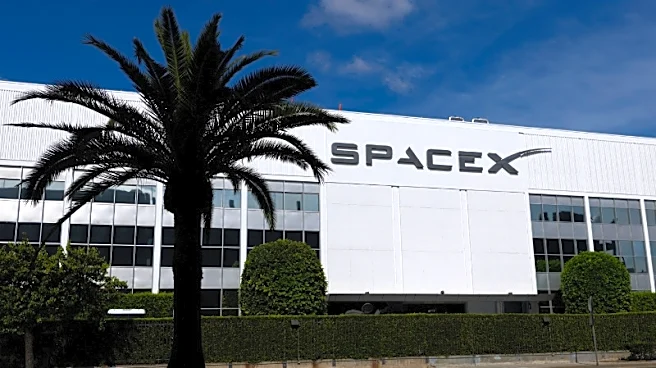
SpaceX, the aerospace company led by Elon Musk, is preparing for an accelerated initial public offering (IPO) with the aim of raising up to $75 billion. The company plans to list on the Nasdaq exchange under the ticker symbol 'SPCX'. This move is set
to make SpaceX one of the largest public companies in the U.S., with a valuation potentially reaching $1.75 trillion. The IPO is scheduled for June 12, following a roadshow beginning on June 4. SpaceX has also undergone a 5-for-1 stock split to make shares more accessible to retail investors. The company is expected to be included in the Nasdaq-100 index shortly after its debut, which could lead to significant buying activity from index funds.
Why It's Important?
The SpaceX IPO is significant as it represents one of the largest capital raises in history, potentially surpassing the previous record set by Saudi Aramco. This move could have substantial implications for the space economy and the broader financial markets. The inclusion of SpaceX in the Nasdaq-100 index will likely drive substantial investment from index funds, impacting stock market dynamics. Additionally, the IPO highlights the growing interest and investment in the space and AI sectors, which are seen as key areas of future economic growth. The success of this IPO could set a precedent for other large tech companies considering public offerings.
What's Next?
Following the IPO, SpaceX insiders will be subject to a 180-day lockup period, during which they cannot sell their shares. This period is expected to end on December 9. The company's inclusion in the Nasdaq-100 index will likely lead to increased trading activity and investment. Investors and analysts will be closely watching SpaceX's performance post-IPO, as large IPOs have historically faced challenges in maintaining initial valuations. The outcome of this IPO could influence the strategies of other tech companies considering going public.