


What's Happening?
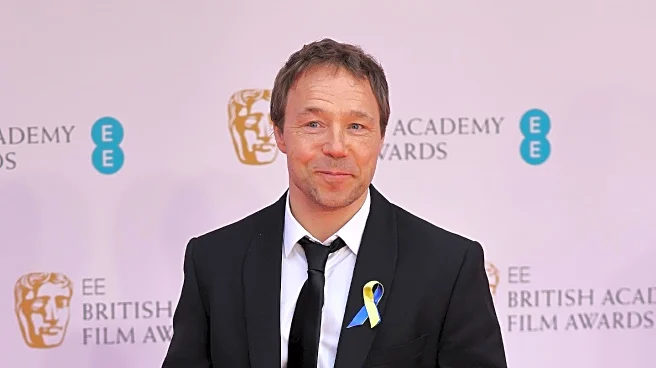
During the recent British Academy Film and Television Arts (BAFTA) Awards, a vocal tic from John Davidson, a nominee and Tourette syndrome advocate, resulted in a racial slur being uttered while two Black actors, Michael B. Jordan and Delroy Lindo, were
on stage. This incident has sparked complex emotions among Black individuals with Tourette syndrome, as it highlights the intersection of racial and disability issues. The BBC faced criticism for airing the slur uncensored, and both the BAFTA and BBC have issued apologies. The event has prompted discussions about the need for greater understanding of Tourette syndrome, particularly the involuntary nature of tics like coprolalia, which involves the utterance of socially unacceptable words.
Why It's Important?
The incident underscores the challenges faced by Black individuals with Tourette syndrome, who may experience both racial discrimination and ableism. It highlights the need for increased awareness and sensitivity towards the disorder, as well as the importance of media responsibility in handling such situations. The backlash against the BBC for not censoring the slur points to a broader conversation about the role of broadcasters in preventing harm. Additionally, the event has catalyzed advocacy efforts to support Black individuals with Tourette syndrome, emphasizing the need for community and understanding in navigating these dual identities.
What's Next?
Advocacy groups are using the incident as a catalyst to expand support networks for Black individuals with Tourette syndrome. There is a push for more resources and support groups to help those who feel isolated by their condition. The Tourette Association of America is actively working to provide more support for people of color, including offering educational resources and support groups. This incident may also lead to broader discussions about media practices and the importance of sensitivity in broadcasting live events.
Beyond the Headlines
The BAFTA incident brings to light the broader societal issues of racism and ableism, particularly how they intersect for individuals with disabilities. It raises questions about how society perceives and reacts to involuntary actions caused by neurological disorders. The event also highlights the potential for misinformation and stereotypes to exacerbate discrimination, emphasizing the need for education and empathy. Long-term, this could lead to more inclusive policies and practices in media and public spaces to better accommodate and understand individuals with Tourette syndrome.