






What's Happening?
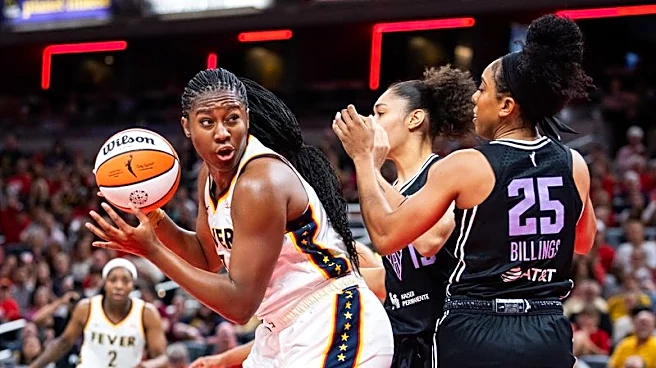
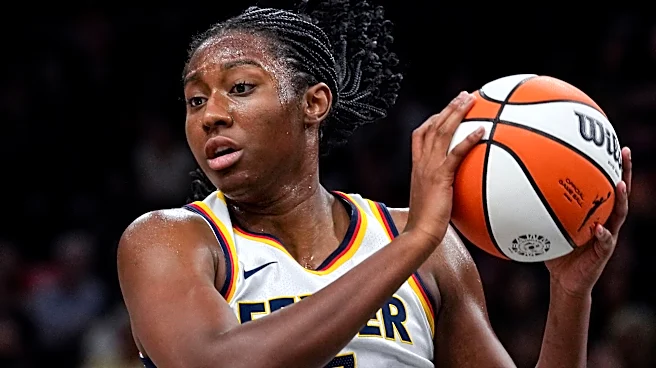
Sophie Cunningham, a guard for the Indiana Fever, has openly expressed her dissatisfaction with her recent contract renewal under the new Collective Bargaining Agreement (CBA). Cunningham re-signed with the team on a one-year, $665,000 deal. During a discussion
on her podcast 'Show Me Something,' co-hosted by West Wilson, she candidly shared her disappointment, particularly regarding the contract's duration rather than the financial terms. Cunningham, who recently recovered from an MCL injury, emphasized her desire for a longer-term commitment with the team, citing her love for Indiana and her wish to settle there with her pets. Despite her frustration, Cunningham remains focused on her performance, having averaged 8.6 points per game and achieving a career-best 43.2 percent from three-point range last season.
Why It's Important?
Cunningham's comments highlight ongoing challenges within the WNBA regarding player contracts and the impact of the new CBA. Her situation underscores the difficulties athletes face when recovering from injuries and negotiating contracts that reflect their value and commitment to a team. The broader significance lies in the potential implications for player retention and team dynamics within the league. Cunningham's case may prompt discussions about contract structures and the support provided to players returning from injuries. Her openness about the situation also sheds light on the personal and professional considerations athletes must balance, influencing how teams and the league address player concerns moving forward.
What's Next?
Cunningham's remarks could lead to further dialogue between players, teams, and the WNBA regarding contract negotiations and the support system for injured players. As the league continues to evolve under the new CBA, there may be increased scrutiny on how contracts are structured and the extent to which they accommodate players' long-term aspirations. Teams might also reassess their strategies for retaining key players, especially those recovering from injuries, to maintain competitive rosters. Cunningham's situation could serve as a catalyst for broader changes in how the league approaches player contracts and support mechanisms.