





What's Happening?
Silicon Valley's rapid expansion in AI infrastructure is encountering a significant challenge due to the limitations of copper wiring. As AI systems scale, the reliance on copper for data transmission between GPUs is becoming a bottleneck, leading to increased
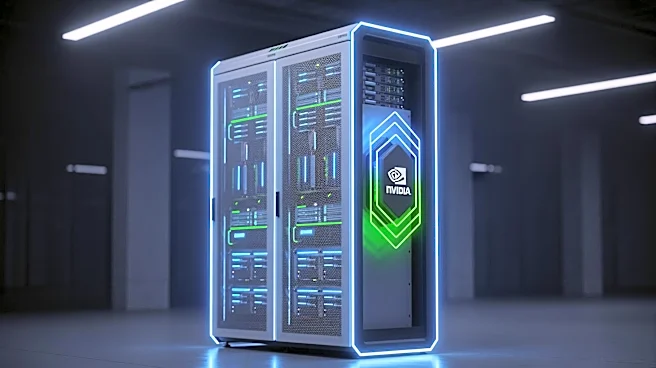
heat and power consumption. To address this, companies are turning to photonics, which uses light instead of electrical signals for data transfer. Lightmatter, a startup in Silicon Valley, is at the forefront of this shift, having developed photonics hardware that allows for faster and more efficient data movement. The company has raised substantial investment and recently joined Nvidia's NVLink Fusion ecosystem, enhancing compatibility with Nvidia's AI hardware. The transition to photonics is seen as essential for maintaining competitive advantage in AI model development, as it allows for faster training times and reduced energy consumption.
Why It's Important?
The shift from copper to photonics in AI infrastructure is crucial for sustaining the growth of AI technologies. As AI models become more complex, the need for efficient data transfer methods becomes critical. Photonics offers a solution by enabling faster and longer-distance data transmission with less energy, which is vital for the development of frontier AI models. This transition not only supports the scalability of AI systems but also addresses the growing energy demands of data centers. Companies that adopt photonics early are likely to gain a competitive edge by releasing AI models more quickly and efficiently. This technological advancement could significantly impact the AI industry, influencing how data centers are designed and operated, and potentially leading to broader adoption of photonics in other tech sectors.
What's Next?
As the adoption of photonics technology increases, we can expect significant changes in data center design and operation. Companies will likely invest in upgrading their infrastructure to incorporate photonics, leading to a potential shift in industry standards. This could also drive further innovation in photonics technology, as companies seek to optimize their systems for even greater efficiency and performance. Additionally, the collaboration between companies like Lightmatter and Nvidia suggests that partnerships will play a key role in advancing this technology. As more companies recognize the benefits of photonics, we may see increased investment and research in this area, potentially leading to new breakthroughs in AI infrastructure.