







What's Happening?
Theo Ubique's production of 'Damn Yankees' is receiving praise for its charming and competent revival of the classic American musical. Directed by Daryl D. Brooks and choreographed by Christopher Chase Carter, the show features a talented cast that brings
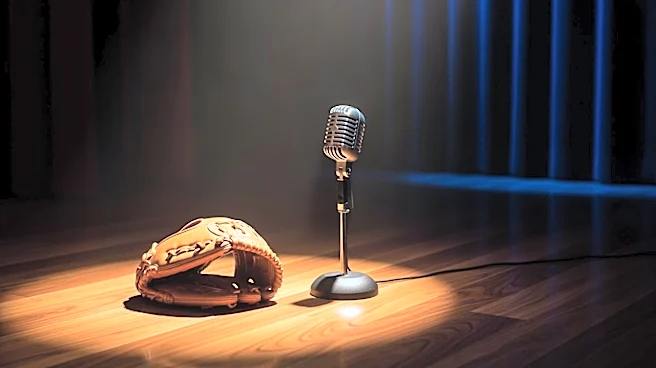
fresh energy to the 1955 Broadway hit. The musical, which retells the Faust legend through the story of a middle-aged man who sells his soul to play baseball for his favorite team, is set for a Broadway revival in 2027. The production at Theo Ubique is noted for its intimate setting and creative staging, transforming the theater into a small baseball stadium. Key performances include Luke Nowakowski as Joe Hardy and Jenny Couch as Lola, both of whom bring depth and humor to their roles. The musical score by Richard Adler and Jerry Ross remains a highlight, with songs like 'Heart' and 'Whatever Lola Wants' engaging the audience.
Why It's Important?
The revival of 'Damn Yankees' at Theo Ubique highlights the enduring appeal of classic American musicals and their ability to resonate with contemporary audiences. This production not only showcases the timeless themes of ambition and desire but also reflects on the cultural and societal values of the 1950s. By bringing fresh talent and innovative staging to a well-loved musical, Theo Ubique reinforces the importance of preserving and reimagining classic works for new generations. The success of this production could influence future revivals and adaptations, encouraging theaters to explore creative approaches to traditional material. Additionally, the show's focus on baseball, a quintessential American pastime, adds a layer of nostalgia and cultural significance, appealing to a wide range of theatergoers.
What's Next?
As 'Damn Yankees' continues its run at Theo Ubique, audiences can expect the production to maintain its momentum and attract theater enthusiasts looking for a blend of nostalgia and innovation. The upcoming Broadway revival in 2027 may draw inspiration from this production's success, potentially incorporating similar creative elements and casting choices. The positive reception of this revival could also encourage other theaters to explore classic musicals, leading to a resurgence of interest in mid-20th-century American theater. As the show progresses, it will be interesting to see how it influences the broader landscape of musical theater and the choices made by producers and directors in future revivals.