




What's Happening?
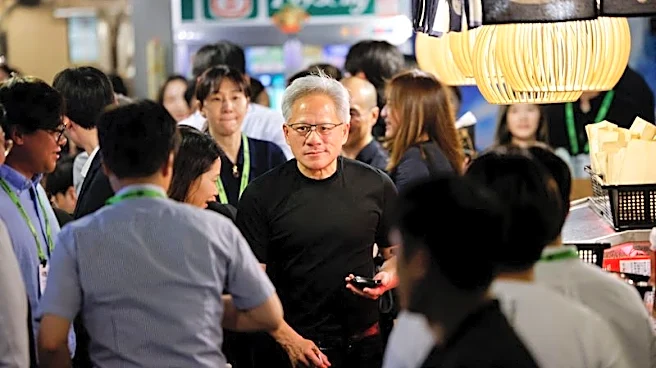
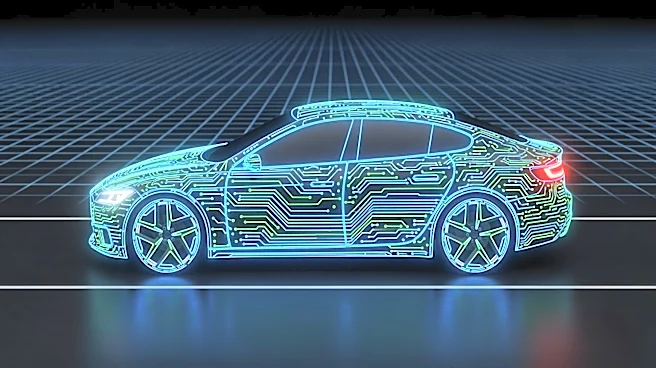
VinFast has announced a new level 4 autonomous driving program aimed at Southeast Asia, in collaboration with Autobrains and Nvidia. The initiative, revealed at GTC Taipei, leverages Nvidia's Drive Hyperion 10 platform to address the complex traffic environments
of the region. This program is designed to offer a cost-efficient approach to autonomous mobility, utilizing Autobrains' Agentic AI, which activates specialized agents only when necessary. This modular architecture aims to overcome the challenges of system complexity and performance in edge cases, which have hindered the adoption of level 4 autonomy. VinFast's strategy is to make advanced mobility accessible and scalable, aligning with its goal to enhance investor confidence and sales volumes following its US listing.
Why It's Important?
The introduction of a level 4 autonomous driving program in Southeast Asia is significant due to the region's challenging traffic conditions, which serve as a rigorous test for autonomous systems. If successful, this could validate the reliability of Autobrains' agentic approach in environments that are more demanding than those in cities like Munich or San Francisco. Additionally, the program's focus on cost-effective deployment could address a major barrier to widespread adoption of autonomous vehicles, which is typically hindered by expensive hardware and computing requirements. For VinFast, this collaboration with credible partners like Nvidia and Autobrains provides a much-needed technological narrative to boost its market position and investor confidence.
What's Next?
The next steps for VinFast involve the practical deployment and testing of this autonomous driving program in Southeast Asia's real-world traffic conditions. The success of this initiative could lead to broader adoption and potential expansion into other markets. Stakeholders, including automotive manufacturers and technology companies, will likely monitor the program's progress closely to assess its viability and scalability. The outcome could influence future investments and partnerships in the autonomous vehicle sector, particularly in regions with similar traffic challenges.