



What's Happening?
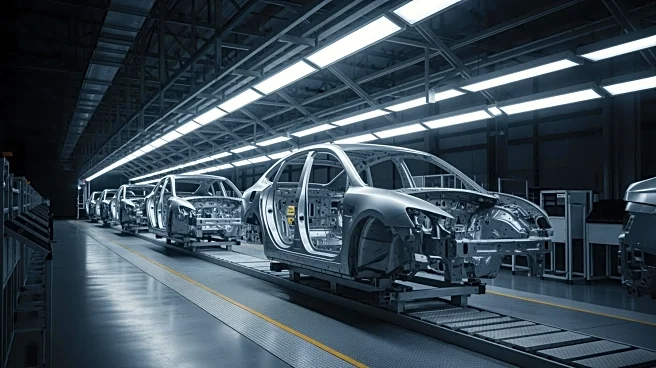
General Motors (GM) has announced the extension of the shutdown of its main electric vehicle (EV) plant in Detroit, known as Factory ZERO, due to sluggish demand for its electric vehicles. The plant, which produces the Chevrolet Silverado EV and GMC Hummer
EV, will remain closed until April 13, continuing a shutdown that began on March 16. This decision affects approximately 1,300 workers who are temporarily laid off. The closure is part of GM's broader strategy to adjust to the cooling EV market, which has seen fluctuating production levels over the past year. Earlier in the year, GM had already cut production by half and reduced shifts and battery production, impacting thousands of workers across its assembly and battery operations. The company has reported $7.6 billion in writedowns related to its EV programs, reflecting the challenges faced in the current market environment.
Why It's Important?
The extended shutdown of GM's Factory ZERO highlights significant challenges in the electric vehicle market, particularly as consumer interest appears to be waning. This development is crucial for the U.S. automotive industry, as it underscores the volatility and uncertainty in the transition to electric vehicles. The temporary layoffs of 1,300 workers also have socio-economic implications, affecting the livelihoods of those employed at the plant and potentially impacting the local economy. GM's decision to boost production of heavy-duty internal-combustion trucks at another Michigan plant suggests a strategic pivot towards more profitable segments amid the current EV market conditions. This move could influence other automakers to reassess their EV strategies and production plans, potentially slowing the overall shift towards electric vehicles in the U.S.
What's Next?
As GM navigates the challenges of the EV market, the company is likely to continue evaluating its production strategies and market positioning. The focus on increasing production of internal-combustion trucks indicates a potential shift in priorities, at least in the short term. Stakeholders, including employees, suppliers, and investors, will be closely monitoring GM's next steps, particularly any further adjustments to its EV production plans. Additionally, regulatory changes and consumer preferences will play a critical role in shaping the future of GM's electric vehicle initiatives. The broader automotive industry may also respond by adjusting their own strategies in light of GM's actions and the evolving market dynamics.