





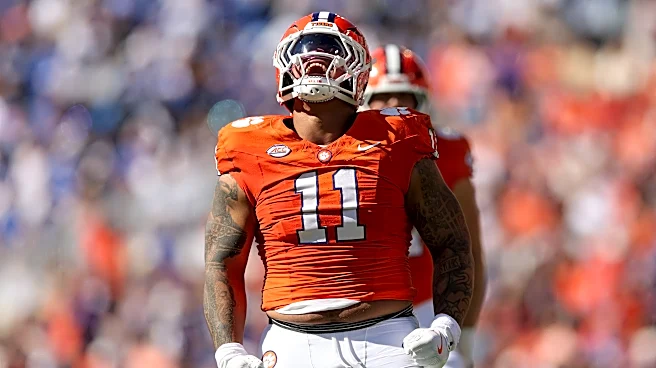

What's Happening?
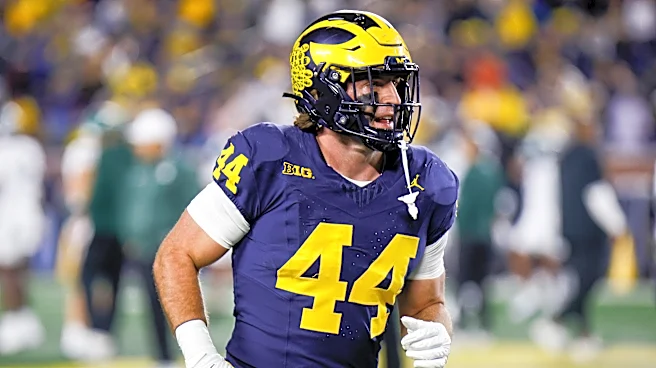
The Detroit Lions are evaluating Michigan linebacker Jimmy Rolder as a potential mid-round pick in the upcoming NFL Draft. Rolder, who is projected to be selected in the third or fourth round, has caught the attention of the Lions due to his playmaking
abilities despite a history of injuries during his college career. Over the past few seasons, Rolder has missed several games due to unspecified injuries, which have raised concerns about his durability. The Lions are reportedly considering Rolder for a Top-30 visit, a process that involves a thorough medical evaluation to assess the impact of his past injuries. If these injuries are deemed minor and manageable, Rolder could be seen as a low-risk prospect due to his young age and potential for recovery.
Why It's Important?
The potential drafting of Jimmy Rolder by the Detroit Lions highlights the team's strategy to strengthen their defense with young talent. Rolder's selection could provide the Lions with a promising linebacker who, if healthy, can contribute significantly to their defensive lineup. However, the decision also underscores the risks associated with drafting players with injury histories, as it requires careful medical assessments to ensure long-term viability. For the Lions, successfully integrating Rolder into their roster could enhance their defensive capabilities, but it also poses a gamble if his injuries persist. This decision reflects broader trends in the NFL where teams must balance talent acquisition with health risks.
What's Next?
The Lions will continue their evaluation process, which includes medical assessments and possibly a Top-30 visit for Rolder. Depending on the outcomes, the team will decide whether to proceed with drafting him. If selected, Rolder will need to demonstrate his fitness and ability to contribute to the team during training camps and pre-season games. The Lions' decision will also be influenced by their overall draft strategy and the availability of other prospects who might fill similar roles without the associated injury concerns.