



What's Happening?
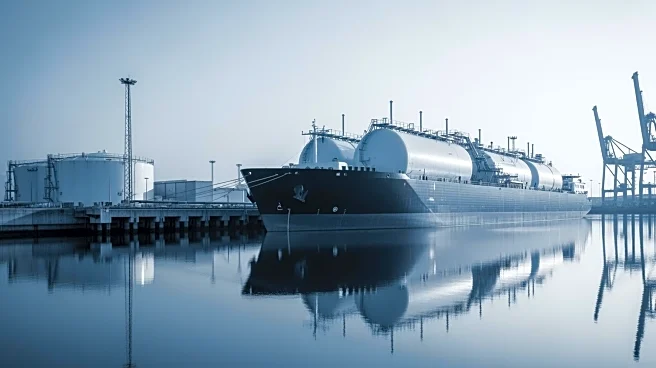
TOTE Group has announced a partnership with a Texas-based bunkering company to introduce LNG bunker barge services in the Houston/Galveston Bay area. This initiative aims to cater to the growing demand for LNG as a fuel option for various vessel classes, including cruise ships and boxships. The partnership involves the construction and operation of a Jones Act-compliant bunker vessel service, which will facilitate refueling while vessels are moored at cargo or passenger terminals. This approach is designed to save time and reduce costs by eliminating the need for vessels to move to separate refueling piers. TOTE Services, with extensive experience in LNG bunkering, will operate a fleet of Jones Act LNG bunker barges for Galveston LNG Bunker
Port (GLBP). The project has secured necessary federal and state permits and is in discussions with potential customers for offtake purchasing.
Why It's Important?
The introduction of LNG bunker barge services in the Galveston area represents a significant development in the U.S. maritime industry, particularly in the context of increasing environmental regulations and the shift towards cleaner fuel alternatives. LNG is considered a more environmentally friendly option compared to traditional marine fuels, and its adoption is expected to reduce emissions from shipping operations. This move by TOTE Services and its partners could position the Houston/Galveston area as a key hub for LNG bunkering, potentially attracting more LNG-powered vessels to the region. The project also highlights the importance of compliance with the Jones Act, which mandates the use of U.S.-owned, built, and crewed vessels for coastwise trade, thereby supporting domestic maritime industries.
What's Next?
Galveston LNG Bunker Port is working towards a final investment decision, expected later this year, as it continues negotiations with potential customers. The project aims to produce approximately 0.2 million tonnes per annum of LNG. Meanwhile, a competing project by Houston-based Stabilis is also underway, with plans to bring a larger LNG production facility online by 2027. Stabilis has already secured long-term sales contracts for a significant portion of its planned capacity. The competition between these projects could drive further innovation and investment in the LNG bunkering sector, potentially influencing fuel supply dynamics and pricing in the region.