


What's Happening?
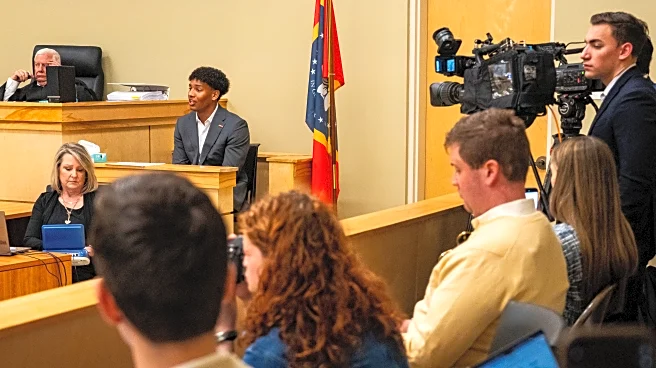
Trinidad Chambliss, the quarterback for Ole Miss, has been granted an extra year of eligibility following a court ruling in Mississippi. The decision came after Chambliss filed a lawsuit against the NCAA, which had previously denied his request for a sixth year of eligibility. Judge Robert Whitwell ruled in favor of Chambliss, stating that the NCAA had ignored its own rules and failed to properly consider Chambliss' medical history. Chambliss, who transferred to Ole Miss from Ferris State, had a breakout season, leading the team to the College Football Playoff semifinals. The NCAA has the option to appeal the ruling, which could impact Chambliss' eligibility for the 2026 season.
Why It's Important?
The court's decision to grant Chambliss an extra year of eligibility
is significant for Ole Miss, as it allows them to retain a key player who has been instrumental in their recent success. Chambliss' performance has been a major factor in Ole Miss' competitive standing, and his return could enhance their prospects for the upcoming season. The ruling also highlights ongoing debates about NCAA eligibility rules and the treatment of athletes with medical histories. For Chambliss, this decision provides an opportunity to further develop his skills and potentially improve his prospects for the NFL Draft.
What's Next?
The NCAA may choose to appeal the court's decision, which could lead to further legal proceedings. If the ruling stands, Chambliss will prepare to lead Ole Miss in the 2026 season, aiming to build on his previous success. The team will also focus on integrating new players and adjusting to changes in coaching staff, as they aim for another strong performance in the College Football Playoff. The outcome of this case could influence future eligibility decisions and policies within the NCAA.