
What's Happening?
Recent data indicates a troubling rise in small business bankruptcies across the United States, suggesting a potential economic downturn. According to experts, the increase in bankruptcies and store closures
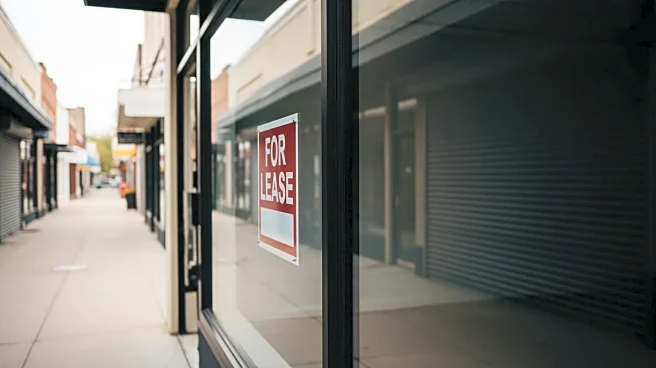
among mom-and-pop shops, small restaurants, and local retailers is an early warning sign of broader economic challenges. Joe Barsalona, a bankruptcy lawyer, notes that small businesses are often the first to feel the impact of economic stress, as they rely heavily on personal finances to stay afloat. The number of small businesses filing for Subchapter V bankruptcy, a restructuring program for companies with less than $3.4 million in debt, has already surpassed last year's total, with 2,221 filings by early December. This trend is exacerbated by rising costs, including increased shop rents and product prices, which are forcing small businesses to close at a record pace. In 2025, 8,234 stores have shuttered, marking a 12% increase from the previous year.
Why It's Important?
The surge in small business bankruptcies highlights a growing economic divide between large corporations and smaller enterprises. While billion-dollar companies continue to thrive with soaring stock prices and profits, small businesses are struggling to survive. This disparity underscores the vulnerability of small businesses to economic fluctuations and the challenges they face in competing with larger, more resilient corporations. The increase in bankruptcies not only threatens the livelihoods of small business owners but also impacts local economies and communities that rely on these businesses for jobs and services. As small businesses close, there is a risk of increased unemployment and reduced consumer spending, which could further strain the economy.
What's Next?
If the trend of rising small business bankruptcies continues, it could lead to broader economic distress, potentially affecting larger companies and the overall economy. Economists warn that the current situation may be the beginning of a more significant economic downturn. Policymakers and economic stakeholders may need to consider measures to support small businesses, such as financial assistance or regulatory changes, to prevent further closures and mitigate the impact on the economy. Additionally, the Small Business Administration and other government agencies may need to expand their support programs to help small businesses navigate these challenging times.
Beyond the Headlines
The current economic challenges faced by small businesses may have long-term implications for the U.S. economy. The decline of small businesses could lead to a loss of diversity and innovation in the marketplace, as well as a reduction in consumer choice. Furthermore, the economic divide between large corporations and small businesses may exacerbate social and economic inequalities, as wealth and resources become increasingly concentrated among a few dominant players. Addressing these issues may require a reevaluation of economic policies and a renewed focus on supporting small businesses as vital contributors to the economy.