
What's Happening?
Uncrewed systems manufacturer AV, formerly known as AeroVironment, has launched a new product line called Mayhem, which falls into the emerging category of 'launched effects'. This new line aims to build
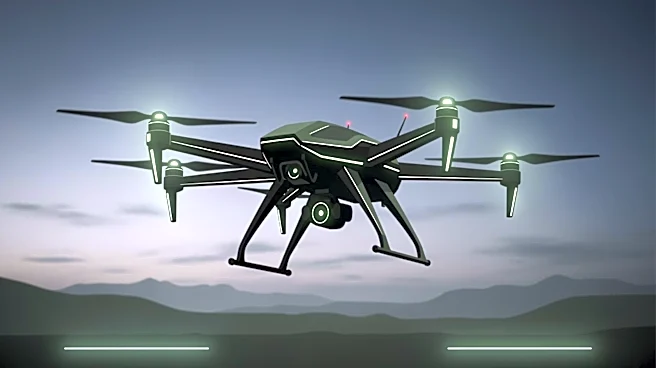
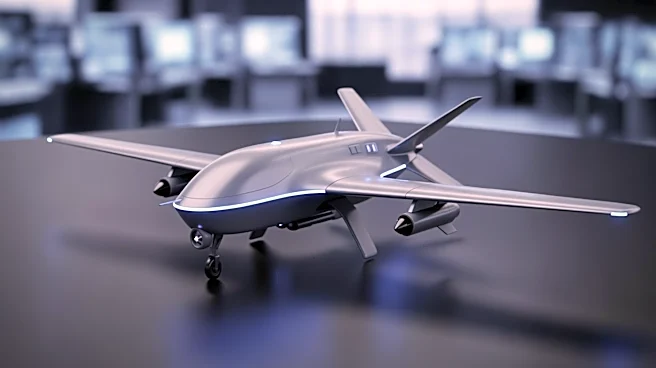
upon AV's experience with loitering munitions, specifically the Switchblade series. The Mayhem 10, AV's initial offering, is a modular UAS with a range of 100km and a payload capacity of 10lb, designed for kinetic strike, reconnaissance, electronic warfare, and other battlefield functions. The US Army is particularly interested in this category to overcome the vulnerability of low-flying rotary-wing aircraft to guided missiles. The Mayhem 10 is expected to enhance the capabilities of rotorcraft and armored vehicles by providing greater range and larger payloads.
Why It's Important?
The introduction of the Mayhem UAS is significant for the US Army as it seeks to improve the survivability and effectiveness of its rotary-wing aircraft against guided missile threats. By integrating air-launched UAS like the Mayhem 10 into its Boeing AH-64E attack and Sikorsky UH-60M utility helicopters, the Army aims to enhance situational awareness and enable strike and reconnaissance missions while avoiding short-range air defenses. This development could lead to increased operational flexibility and effectiveness in combat scenarios, potentially reducing the risk to personnel and equipment. The Mayhem UAS also represents a strategic advancement in uncrewed systems technology, which could influence future military procurement and deployment strategies.
What's Next?
AV is ramping up production capabilities for the Mayhem 10, with plans to achieve low-rate initial production within the current calendar year. The company intends to supply the Mayhem systems to domestic services, particularly the Army and Marine Corps, and potentially expand internationally in the coming years. As AV competes with other major industry players like Northrop Grumman, L3Harris, and Anduril Industries, the success of the Mayhem UAS could lead to further innovations and expansions in the launched effects market. The US Army's adoption of these systems may prompt other military branches and international allies to consider similar technologies.