






What's Happening?
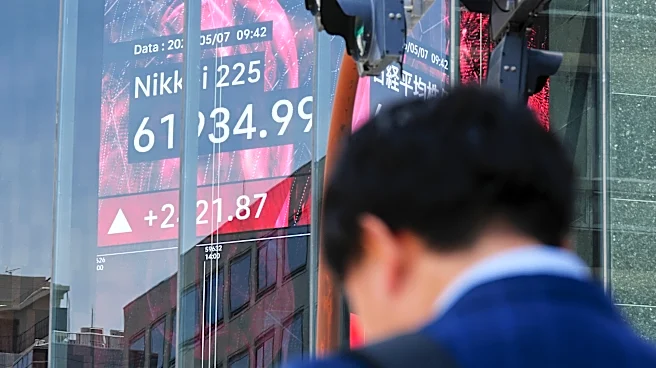
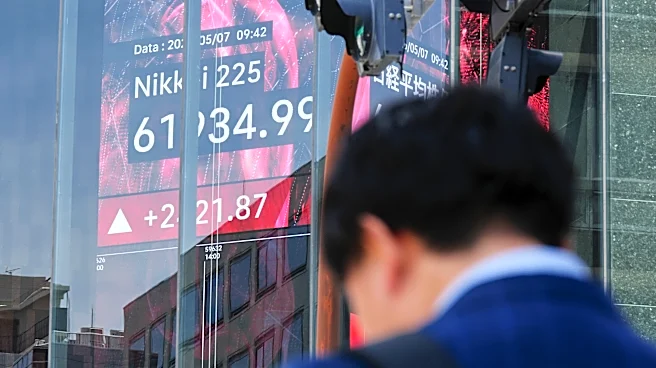
On Monday, global stock markets experienced a significant surge, while the U.S. dollar and oil prices declined. This market movement was driven by optimism surrounding a potential peace deal to end the ongoing conflict in Iran, which has been affecting
global energy prices and economic stability. The nearly three-month-long conflict has led to a sharp increase in energy prices due to the effective shutdown of the Strait of Hormuz, a critical passage for global oil and liquefied natural gas shipments. Despite the positive market response, U.S. President Donald Trump cautioned against rushing into a deal, although he acknowledged that a memorandum of understanding had been largely negotiated. The pan-European STOXX 600 index rose by approximately 1%, and U.S. stock futures also showed gains. However, trading volumes were expected to be low due to public holidays in several markets, including the U.S. and the UK.
Why It's Important?
The potential resolution of the Iran conflict could have significant implications for global markets, particularly in terms of energy prices and inflation. The conflict has contributed to elevated oil prices, which in turn have impacted inflation rates and economic forecasts. A peace deal could stabilize energy prices, providing relief to industries and consumers affected by rising costs. Additionally, the reopening of the Strait of Hormuz would restore a critical supply route for global energy markets, potentially easing supply chain disruptions. However, the situation remains fluid, and the market's response will depend on the concrete outcomes of the negotiations and the timeline for reopening the strait.
What's Next?
The next steps involve closely monitoring the progress of the peace negotiations between the U.S. and Iran. Market participants will be looking for official announcements and concrete timelines for the reopening of the Strait of Hormuz. The response from major stakeholders, including oil-producing nations and global energy companies, will also be crucial in determining the market's direction. Additionally, the Federal Reserve's policy decisions in response to changing inflation dynamics will be closely watched, as they could influence interest rates and economic growth prospects.