



What's Happening?
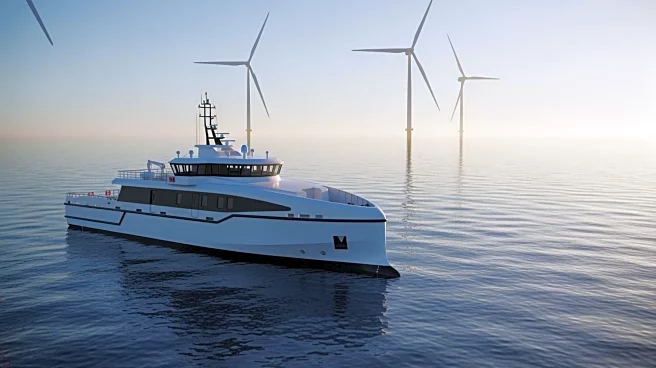
OEG has expanded its offshore wind vessel fleet with the addition of Fulmar, a new multi-purpose crew transfer vessel (CTV). Following successful sea trials, Fulmar is set to operate in U.K. waters, having secured its first charter in Scotland. The vessel will
support offshore construction work at the Inch Cape Offshore Wind Farm, a project awarded to OEG last year. Fulmar is designed to accommodate up to 24 personnel for high-speed transfers and can be configured for extended offshore trips. It is tailored for maneuverability and stability in offshore conditions, providing crew and cargo transfers to the offshore substation platform and supporting servicing of welfare units installed on the platform by OEG. The vessel is part of OEG's strategic fleet modernization program, which includes the introduction of newbuilds with lower emissions and higher performance capabilities.
Why It's Important?
The addition of Fulmar to OEG's fleet underscores the company's commitment to supporting the growing offshore wind industry in Scotland and beyond. As the Inch Cape Offshore Wind Farm is one of Scotland's largest, with a capacity to power more than half of Scotland's homes, the operational efficiency and sustainability of support vessels like Fulmar are crucial. This development highlights the increasing demand for modern, efficient vessels in the renewable energy sector, reflecting broader trends towards sustainable energy solutions. OEG's investment in fleet modernization not only enhances its operational capabilities but also aligns with global efforts to reduce carbon emissions and promote renewable energy sources.
What's Next?
OEG plans to continue its strategic fleet modernization program, with further disposals of older vessels expected this year. The company is focused on introducing newbuilds with enhanced performance and lower emissions, which will likely strengthen its position in the offshore wind sector. As the Inch Cape project progresses, Fulmar's deployment will be closely watched as a benchmark for future offshore wind support operations. The success of this project could lead to further opportunities for OEG in the expanding offshore wind market, both in the U.K. and internationally.