



What's Happening?
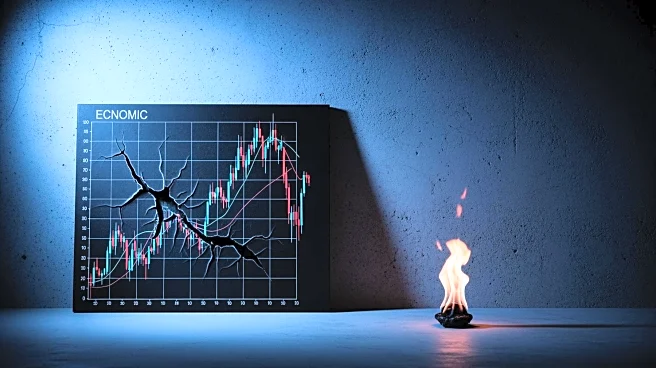
The ongoing conflict with Iran is significantly impacting the U.S. economy, with experts warning of an increased risk of recession. The RecessionPulse index, which evaluates the health of the U.S. economy, has raised the recession risk score to 44 out
of 100, indicating elevated concerns. Mark Zandi, chief economist at Moody's Analytics, highlighted that the conflict has exacerbated existing economic vulnerabilities, particularly through disruptions in global energy production and rising oil prices. The conflict has already led to a decline in major U.S. stock indexes by over seven percent in the past month, and oil prices are nearing levels seen during the 2022 energy crisis. Despite attempts at negotiation, tensions remain high, with Iran rejecting President Trump's 15-point framework for de-escalation and proposing its own conditions for peace.
Why It's Important?
The potential for a U.S. recession carries significant implications for both domestic and global economies. Rising oil prices, a direct consequence of the conflict, are increasing business costs and consumer prices, which could lead to higher inflation and reduced consumer spending. Historically, spikes in oil prices have preceded recessions, and the current situation is no exception. The conflict's impact on energy markets is also affecting consumer confidence, with surveys indicating a sharp decline in economic sentiment. If the conflict continues, the economic strain could deepen, affecting employment, investment, and overall economic growth. The situation underscores the interconnectedness of geopolitical events and economic stability, highlighting the need for strategic responses to mitigate potential downturns.
What's Next?
The future of the U.S. economy largely depends on the resolution of the Iran conflict. Analysts suggest two possible outcomes: a period of economic growth if tensions ease, or a severe global recession if the conflict escalates. The U.S. administration has downplayed the economic impact, but continued hostilities could lead to further market instability and increased recession risks. The deployment of additional U.S. troops to the region suggests a potential for prolonged conflict, which could exacerbate economic challenges. Stakeholders, including businesses and policymakers, will need to monitor developments closely and prepare for potential economic adjustments.