






What's Happening?
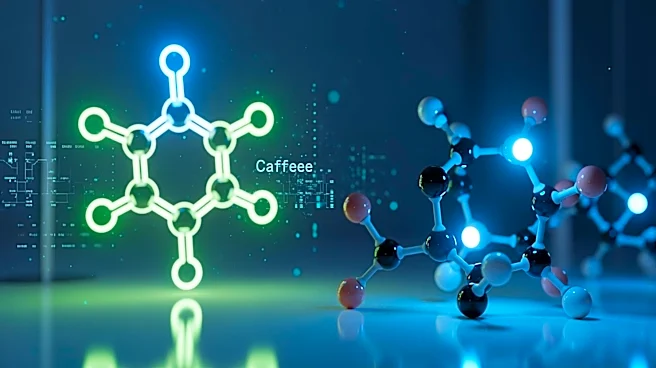
Researchers at the Texas A&M Health Institute of Biosciences and Technology have developed a novel molecular switch using caffeine, guided by artificial intelligence (AI). This innovation, known as the caffeine-operated dissociation system (CODS), was
detailed in a study published in the Journal of the American Chemical Society. The system utilizes AI to design a caffeine-responsive protein that acts as a 'pause button' for engineered cells. By binding a caffeine molecule to a synthetic mini-binder, the system can control cellular functions by dissociating the components upon caffeine addition. This mechanism was demonstrated in various biological contexts, including gene circuits and CAR T cells, showcasing its potential to modulate cellular activities without destroying therapeutic cells.
Why It's Important?
The development of CODS represents a significant advancement in the field of synthetic biology and therapeutic applications. By providing a precise control mechanism for engineered cells, this technology could enhance the safety and efficacy of cell-based therapies. The use of caffeine, a familiar and safe molecule, as a control signal offers a novel approach to modulating cellular functions, potentially leading to more responsive and controllable medical treatments. This innovation could impact the development of therapies for diseases where precise cellular control is crucial, such as cancer and autoimmune disorders, thereby benefiting patients and healthcare providers by improving treatment outcomes.
What's Next?
The research team plans to further test the CODS system in therapeutic cells, animal models, and disease-relevant settings. These steps are crucial before considering clinical applications. The potential for CODS to be adapted for other safe and accessible molecules could expand its utility in various therapeutic contexts. As programmable cell therapies continue to advance, the ability to modulate them with simple molecules like caffeine may become a powerful tool in personalized medicine, offering new avenues for treatment customization and patient safety.
Beyond the Headlines
The ethical and regulatory implications of using AI-designed molecular switches in medical treatments are significant. As this technology progresses, it will be essential to address concerns related to safety, efficacy, and the potential for unintended consequences. The integration of AI in designing biological systems also raises questions about intellectual property and the accessibility of such innovations. Ensuring that these advancements benefit a broad range of patients while maintaining ethical standards will be a critical challenge for researchers and policymakers.