





What's Happening?
U.S. grocery prices are expected to rise due to increasing fuel costs, driven by geopolitical tensions in the Middle East. The U.S. Department of Agriculture forecasts a 3.1% increase in 'food at home' prices for 2026, nearly double the initial projection.
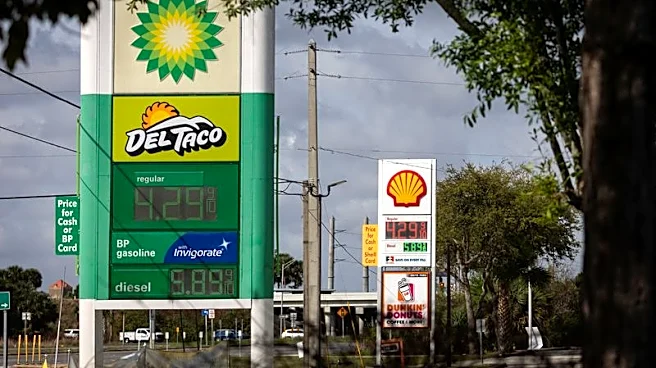
The conflict in Iran has led to a spike in oil and gas prices, affecting the entire food supply chain. Diesel fuel, essential for transportation and farming, has seen significant price increases, impacting perishable goods like produce and meat first. The cost of imported items, such as avocados and bananas, is also rising due to longer transportation distances.
Why It's Important?
The increase in grocery prices is a concern for consumers already facing inflationary pressures. Higher food costs can strain household budgets, particularly for low-income families. The situation highlights the vulnerability of the food supply chain to global events and the interconnectedness of energy and food markets. Retailers and food processors may struggle to absorb these costs, potentially passing them on to consumers. This could lead to changes in consumer behavior, with more people opting for cheaper, generic brands or reducing discretionary spending.
What's Next?
The duration and impact of the conflict in Iran will be crucial in determining future price trends. A prolonged conflict could lead to sustained high fuel prices, further affecting food costs. Policymakers may need to consider interventions to stabilize prices, such as subsidies or strategic reserves. Consumers and businesses will need to adapt to the changing economic landscape, potentially altering purchasing habits and supply chain strategies.