




What's Happening?
President Trump announced a two-week ceasefire with Iran, leading to significant movements in financial markets. The announcement came shortly before a deadline set by Trump, who warned of severe consequences if Iran did not agree to a deal. The ceasefire has
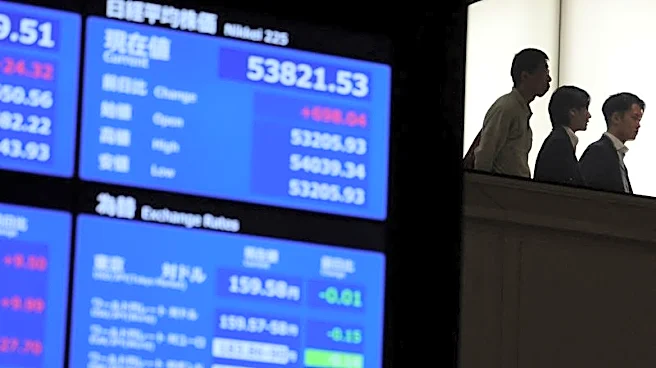
alleviated concerns about prolonged conflict in the Middle East, which had been driving up oil prices and contributing to inflation fears. As a result, oil prices dropped significantly, with Brent crude falling 13% and West Texas Intermediate crude dropping 18%. The ceasefire has also led to a major relief rally in U.S. stocks, with the Dow Jones Industrial Average rising over 1,300 points, the S&P 500 increasing by 2%, and the Nasdaq 100 gaining more than 3%. Additionally, the U.S. Dollar Index fell by 1%, reflecting expectations for lower interest rates.
Why It's Important?
The ceasefire announcement is crucial as it eases tensions in the Middle East, a region critical to global oil supply. The reduction in oil prices is expected to lower inflationary pressures, which have been a significant concern for investors and policymakers. Lower inflation could lead to a more favorable economic environment, reducing the risk of a recession. The market rally indicates renewed investor confidence, which could stimulate economic growth. Furthermore, the decline in the U.S. dollar and Treasury yields suggests a shift in expectations regarding future interest rate cuts by the Federal Reserve, potentially impacting borrowing costs and investment decisions.
What's Next?
Negotiations between the U.S. and Iran are expected to take place during the ceasefire period, with the potential for a more permanent resolution to the conflict. Market participants will closely monitor these talks, as their outcome could further influence oil prices and inflation expectations. The Federal Reserve's interest rate policy will also be under scrutiny, as changes in inflation dynamics may affect its decisions. Investors and businesses will be watching for any signs of progress in the negotiations, which could lead to further market adjustments.