



What's Happening?
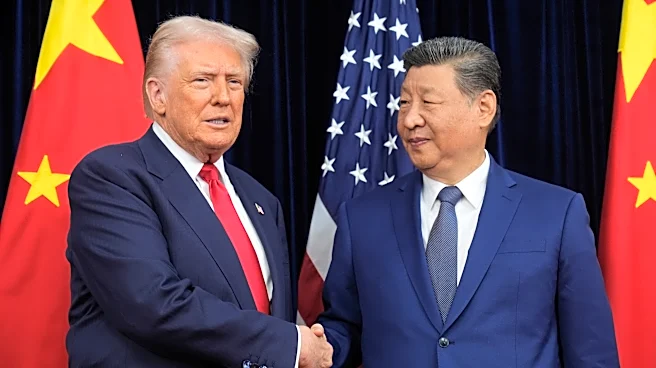
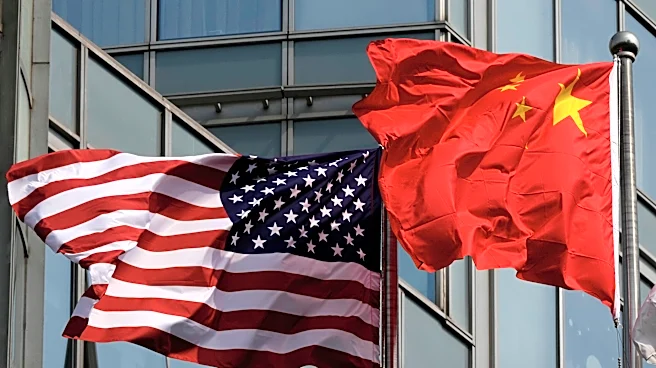
As President Trump prepares to meet with Chinese President Xi Jinping, U.S. soybean farmers are closely monitoring the discussions for potential advancements in agricultural trade negotiations. The U.S. and China have an existing agreement that includes
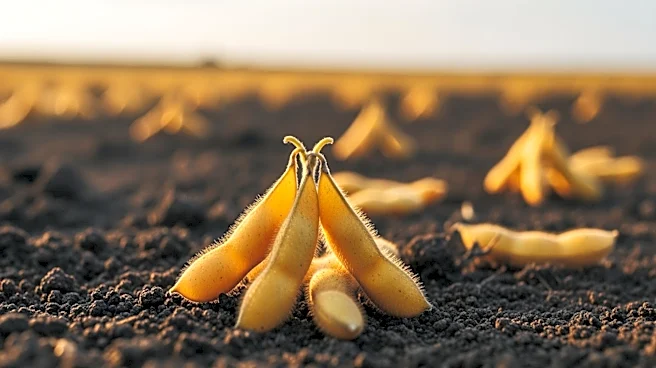
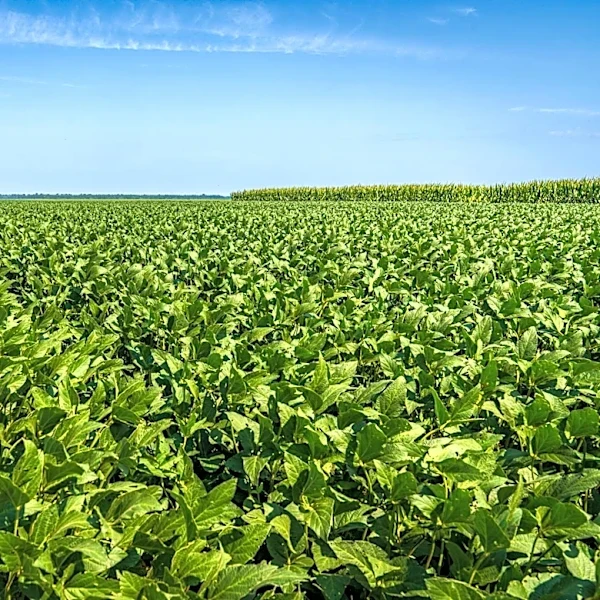
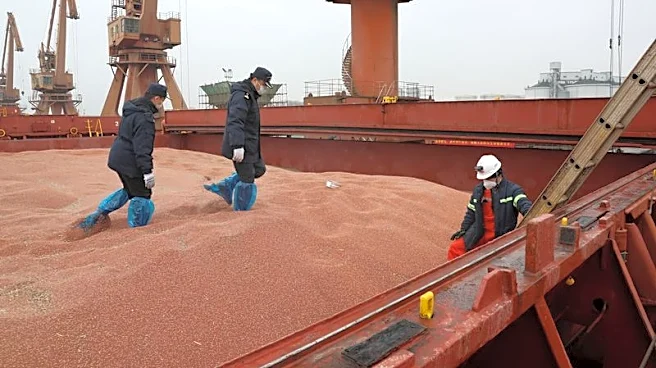
a commitment from China to purchase a specified amount of U.S. soybeans annually through 2028. However, Brazil's share of China's soybean imports has been increasing, while the U.S. share has declined, reaching a low last year. This shift has been concerning for U.S. farmers, who are facing rising production costs. Despite these challenges, local farmers like Brian Corkill from Galva, Illinois, remain hopeful that the talks will help the U.S. regain market share lost to Brazil.
Why It's Important?
The outcome of these trade negotiations is crucial for U.S. soybean farmers, who have been struggling with decreased exports to China, a major market. The decline in U.S. soybean exports has been exacerbated by increased competition from Brazil, which has captured a larger share of the Chinese market. Rising production costs, including those for seed, fertilizer, and herbicides, add to the financial pressures on U.S. farmers. A successful negotiation could stabilize or increase U.S. soybean exports to China, providing much-needed relief to farmers and potentially boosting the agricultural sector. Conversely, failure to secure favorable terms could further erode the U.S. position in the global soybean market.
What's Next?
The negotiations are taking place during a planting season where U.S. soybean acreage is expected to increase. Farmers are hopeful that the talks will lead to improved trade relations and increased exports. However, there is uncertainty about the potential outcomes of President Trump's visit. Farmers like Corkill are cautiously optimistic, hoping that at the very least, the current trade status quo is maintained. The agricultural community will be closely watching for any announcements or changes in trade policy that could impact their operations and financial stability.