
What's Happening?
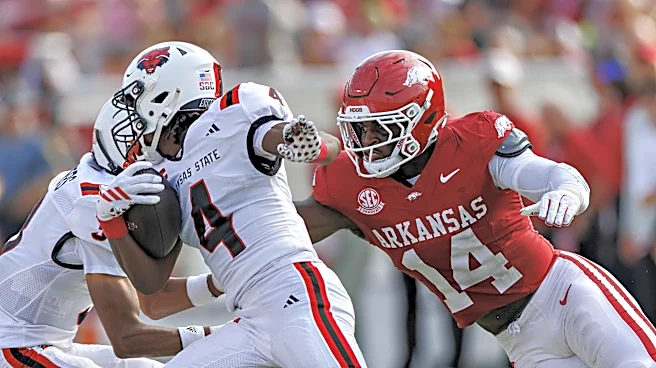
The Southeastern Conference (SEC) has decided to eliminate its traditional late-season 'cupcake' games, where teams played against lower-tier opponents, starting in 2027. This decision was made during
the SEC's spring meetings, where athletic directors voted to ensure all teams play conference games on the second-to-last week of the regular season. The move is part of a broader strategy to increase the competitiveness of the SEC schedule, which will expand from eight to nine conference games beginning in 2026. This change aligns the SEC more closely with other major conferences like the Big Ten, which already play nine conference games. The SEC's decision also involves scheduling at least one nonconference game against a power conference opponent each season.
Why It's Important?
The SEC's decision to end 'cupcake weekend' is significant as it aims to enhance the competitive nature of the conference's football schedule. By eliminating games against inferior opponents, the SEC is expected to improve the quality of matchups, which could lead to increased viewership and revenue. This change also aligns the SEC with other major conferences, potentially impacting the national rankings and playoff selections. Schools within the SEC may face tougher competition, which could affect their win-loss records and postseason opportunities. The decision reflects a broader trend in college football towards more competitive scheduling, which could influence other conferences to follow suit.
What's Next?
With the SEC's new scheduling format set to begin in 2026, schools will need to adjust their future nonconference schedules. Several high-profile nonconference games have already been canceled or rescheduled, including Alabama's series with West Virginia and Florida's series with NC State and Cal. As the SEC transitions to a nine-game conference schedule, teams will need to strategically plan their matchups to maintain competitive balance and meet the new requirements. The impact of these changes will be closely monitored by other conferences, which may consider similar adjustments to their schedules.