



What's Happening?
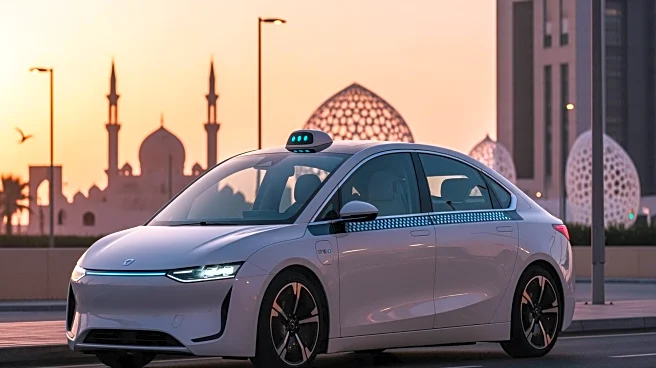
WeRide, a Chinese autonomous driving technology company, and Uber have announced plans to deploy 1,200 robotaxis across Abu Dhabi, Dubai, and Riyadh by 2027. This initiative represents the largest commercial autonomous vehicle commitment in the Middle East and North Africa (MENA) region. The robotaxis will be integrated into the Uber app, expanding on existing operations in Abu Dhabi and planned expansions in Dubai and Riyadh. The deployment will occur progressively, contingent on regulatory approvals and performance milestones. This partnership is part of a broader agreement to operate robotaxis in 15 cities by 2030.
Why It's Important?
The deployment of robotaxis in the MENA region marks a significant step in the global expansion of autonomous vehicle technology.
This initiative could transform urban mobility by reducing reliance on human drivers, potentially lowering costs and increasing efficiency. For Uber, this expansion represents a strategic move to strengthen its presence in the MENA market and align with future mobility trends. The collaboration with WeRide also highlights the growing importance of international partnerships in advancing autonomous technology. This development could influence regulatory frameworks and public acceptance of autonomous vehicles in the region.
What's Next?
As the deployment progresses, regulatory bodies in the MENA region will play a crucial role in shaping the operational landscape for autonomous vehicles. The success of this initiative could lead to further investments in autonomous technology and infrastructure. Additionally, the performance and safety of the robotaxis will be closely monitored, potentially setting benchmarks for future deployments. Stakeholders, including local governments and consumers, will be key in determining the long-term viability and acceptance of autonomous mobility solutions.